

table of contents
Denials are rising, payments don’t match expectations, and your billing team keeps finding one-off fixes instead of one root cause. That’s a familiar pattern in specialty practices and multi-site groups. Administrators often look first at front-desk workflows, coder productivity, or payer behavior. Those matter, but a lot of the damage starts earlier.
The overlooked source is often the charge description master. If the charge structure behind your EHR and practice management system is wrong, every downstream step gets harder. Charges post incorrectly. Claims go out with the wrong details. Payment posting turns into detective work. A/R staff chase balances that were never set up cleanly in the first place.
In hospital settings, people already recognize the CDM as a core billing asset. For physician groups, urgent care chains, and specialty organizations, it deserves the same attention. It may not sit in front of your staff every day, but it influences whether you capture revenue accurately, defend your claims, and keep operations consistent across sites.
The Hidden Source Of Your Practice Revenue Leaks
A practice administrator notices a trend. One location is getting paid faster than another, even though both use the same EHR. A pain management provider documents an injection correctly, but the supply charge doesn’t appear. An endocrinology clinic orders and administers drugs consistently, yet reimbursement patterns keep shifting. The billing manager blames training. The coders blame workflow. The operations lead blames the software.

Then someone finally looks at the charge build.
That’s where the underlying narrative often starts. The charge description master isn’t just a pricing file. It controls how billable services, drugs, supplies, and procedures are defined, triggered, and routed into claims. When it’s inaccurate, the consequences don’t show up as one dramatic failure. They show up as dozens of small financial misses across denials, underpayments, delayed posting, and inflated A/R.
What Revenue Leakage Looks Like In Real Operations
In multi-site groups, CDM errors usually hide in plain sight:
- Different Build By Location: One site has a current charge mapped correctly, while another still uses an outdated setup.
- Incomplete Charge Capture: Clinical staff perform the work, but the system never posts the full billable event.
- Wrong Claim Construction: The charge fires, but it carries the wrong code combination or description.
- A/R Noise: The team sees slower collections, more rework, and more accounts needing manual review, which can distort metrics like accounts receivable days.
A messy denial log often begins with a messy charge build.
Administrators usually feel the symptoms before they identify the cause. That’s why the charge description master deserves executive attention. If it’s neglected, revenue leaks don’t stay confined to billing. They affect staffing decisions, provider compensation confidence, and the credibility of your financial reports.
What Is A Charge Description Master
The simplest way to explain a charge description master is to compare it to a master menu in a large restaurant group. The menu doesn’t just list what customers can order. It defines each item, names it, prices it, links it to the kitchen, and tells the staff how it should be prepared and rung up. If that menu is wrong, orders get entered incorrectly, inventory goes off, and bills come out wrong.
A CDM does the same job for healthcare billing. It is the master list of billable items and services a provider offers, tied to the data needed to create a claim correctly. In U.S. hospital revenue cycles, the CDM is a foundational database that typically contains 15,000 to 25,000 entries, with each entry tied to 15 to 25 data fields. It also reflects the pricing reality that average chargemaster list prices are 164% higher than average negotiated prices, according to Freed Associates on CDM success.

For a practice administrator, the key point is simple. The CDM tells your systems what a service is, how it should be represented, and how it should flow into billing.
The Core Parts Of The CDM
Every charge line needs a set of working parts. The exact setup differs by organization and software platform, but the CDM usually includes these core elements:
- Charge Code: Your internal identifier for the item or service. This is the operational handle your system uses.
- CPT Or HCPCS Code: The standardized procedure or supply code needed for billing.
- Revenue Code: The category that helps organize the service for claim processing.
- Service Description: The plain-language description tied to the charge.
- Standard Price: The listed amount attached to that charge.
- Modifiers: Additional coding details when the service needs more specificity.
- Department Or Site Association: The location, specialty, or operational area responsible for the charge.
Why These Fields Matter In Practice
A charge can look fine on the screen and still be broken underneath. That happens when one field is updated and the others are not. A revised CPT code without a matching description creates confusion for coders and billers. A valid charge code without the right departmental mapping causes posting problems. A supply item with the wrong pricing logic creates patient statement issues later.
Practical rule: Never treat the charge description master as a static spreadsheet. It’s an active billing framework tied to coding, operations, and reimbursement.
For administrators who want a broader view of how all of this connects, this overview of understanding revenue cycle management is useful context. The CDM sits inside that larger system, but it influences far more than is commonly understood.
Why Specialty Practices Should Care
Physician groups sometimes assume the CDM is mainly a hospital concern. That’s a mistake. Specialty practices rely on charge structures for infusions, injections, drugs, supplies, testing, procedures, and location-specific workflows. The more complex the service mix, the more important charge governance becomes.
If you manage multiple sites, each local workaround creates another version of the truth. Over time, those differences show up in denials, missing charges, and endless reconciliation work. A strong charge description master prevents that drift before it reaches the claim.
The Central Role Of The CDM In Your Revenue Cycle
The charge description master is the central nervous system of the revenue cycle. Not because it does every job, but because it connects the jobs that matter. Clinical activity, charge capture, coding, billing, payment posting, denial management, and reporting all depend on whether the original charge setup is sound.
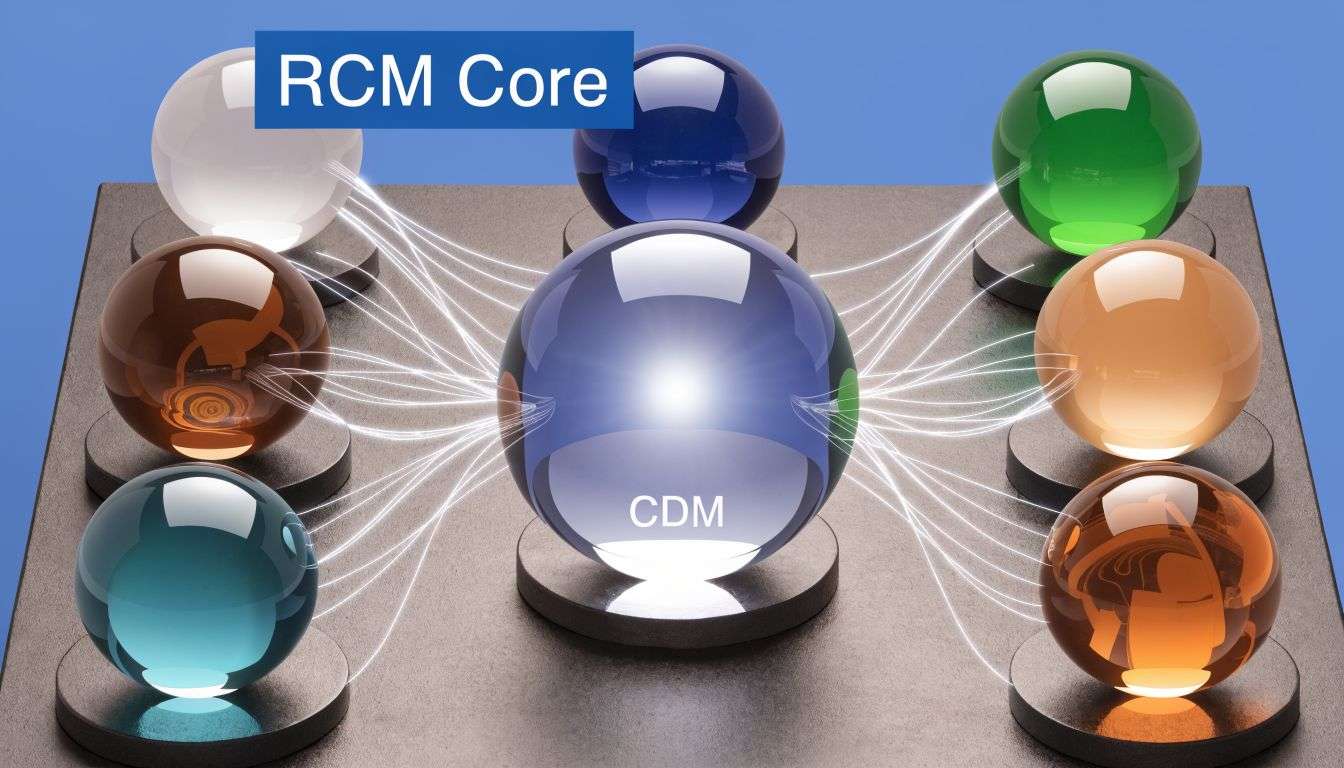
When the CDM is built well, the workflow feels boring in the best possible way. Orders trigger the right charges. Coders see the right options. Claims go out cleanly. Payment posting aligns with expected reimbursement logic. Staff spend less time fixing preventable errors and more time resolving true exceptions.
How A Charge Moves Through The System
A charge usually starts with a real patient event. A provider performs a procedure, administers a drug, or uses a supply. The EHR or practice management workflow then relies on charge logic that already exists.
From there, the CDM affects several handoffs:
- Charge Capture: The service has to post at all.
- Code Association: The charge has to point to the right billing code structure.
- Claim Construction: The information has to land correctly on the claim.
- Payer Adjudication: The payer has to recognize it as valid and payable.
- Reconciliation: Your posting team has to compare payment against what should have happened.
If the build is wrong at step one, every later team inherits the problem.
What A Healthy CDM Changes Financially
For administrators, the practical payoff isn’t abstract. A healthy CDM supports cleaner billing operations and more believable reporting. It also reduces avoidable noise. Instead of chasing discrepancies caused by bad setup, your team can focus on payer-specific issues, true documentation gaps, and contract variance.
That matters in every specialty. It also matters outside traditional physician groups. Anyone responsible for managing finances in dental clinics will recognize the same principle. When the underlying revenue logic is inconsistent, financial reporting becomes less trustworthy and staff spend more time correcting the system than using it.
If your coders, billers, and A/R team keep fixing the same issue in different forms, the problem is often upstream in the charge architecture.
What Happens When The CDM Is Weak
A flawed CDM creates a specific kind of operational fatigue. Teams compensate with manual edits, side spreadsheets, and tribal knowledge. One location knows to add a missing supply. Another remembers which modifier is hardcoded incorrectly. A third site writes off small issues because fixing them case by case takes too much time.
That is not a billing strategy. It’s a workaround culture.
The financial cost shows up in slow cash flow, avoidable denials, and extra labor. The compliance cost is just as serious. Once your organization relies on manual memory instead of reliable charge governance, consistency disappears. In a multi-site setting, that inconsistency is where denial patterns and audit exposure begin.
Common CDM Errors And Compliance Pitfalls To Avoid
Most charge description master problems are not dramatic. They’re ordinary mistakes that stay in place for months because no one owns the whole picture. A coding lead may see one issue. Operations sees another. Finance sees the effect but not the mechanism.
For specialty groups and multi-site organizations, these mistakes multiply quickly because the same service may be documented one way, charged another way, and billed a third way depending on location.
Outdated Codes And Broken Mappings
One of the most common failures is a charge line that wasn’t updated when coding rules changed. The item still exists in the system, staff still use it, but the underlying CPT or HCPCS relationship is no longer aligned with current billing requirements.
That single error can trigger a denial, a hold, or a manual correction queue. It also creates confusion because the front-end workflow appears functional. Staff assume the charge is fine because they can still select it.
Another variation is broken mapping between the EHR, PM system, or feeder systems. In multi-site environments, synchronization problems across locations and EHR setups can lead to unposted charges and denials, with some estimates suggesting a potential loss of 10% to 20% of billable services when organizations fail to maintain uniform charge capture, according to PCH Health’s chargemaster glossary.
Missing Supplies And Drug Charges
Specialty practices feel this problem fast. Infusion, pain management, rheumatology, allergy, endocrinology, and urgent care all depend on reliable charge capture for drugs and supplies. If a procedure charge posts but the related supply line does not, you’ve documented the work without fully billing for it.
That kind of loss is easy to miss because the visit still generates revenue. The account doesn’t look empty. It just looks lower than it should.
Common warning signs include:
- Frequent Small Variances: Payments look a little light, but not bad enough to trigger immediate investigation.
- Manual Staff Workarounds: Teams remember to add charges only at certain sites or for certain providers.
- Provider Frustration: Clinicians feel they’re performing higher-acuity work than collections reflect.
- Inconsistent Patient Statements: Similar encounters create noticeably different balances.
The most dangerous CDM errors are the ones that still allow a claim to go out.
Improper Modifier Use And Unclear Charge Logic
Modifier problems create a different risk. Some charges need clean, fixed logic. Others need coder review because the final billing detail depends on what happened in the encounter. When organizations hardcode too much, they create preventable denials. When they hardcode too little, staff improvise.
That’s why charge design has to reflect clinical reality. If a service is always the same, fixed logic may work. If it varies by documentation, payer rule, or laterality, the charge should leave room for controlled coding review.
A useful reference for teams working through recurring coding failures is this guide to common medical coding errors. Many of those mistakes don’t begin in the coding department. They begin in how the charge was built.
Multi-Site Drift Is Its Own Compliance Problem
The hardest CDM issue to clean up is local customization that nobody formally approved. One clinic changes descriptions to help staff. Another site creates a duplicate charge because the original one was hard to find. A third modifies routing logic after an EHR update.
None of those changes may look serious in isolation. Together, they create:
- Different billing behavior for the same service
- Unreliable reporting across locations
- Conflicting payer outcomes
- Higher audit risk because consistency breaks down
A good administrator pays attention when one site “always has problems” with a service that bills cleanly elsewhere. That usually isn’t a staff quality issue. It’s a build issue.
How To Audit And Maintain A Healthy Charge Master
A healthy charge master doesn’t happen because someone cleans up a spreadsheet once a year. It stays healthy because the organization gives it structure, ownership, and regular review. The most effective audits are operational, not theoretical. They compare the charge build to what clinicians do, what coders need, and what payers accept.

If you’re running a specialty group or a multi-site organization, start with the assumption that no single department can manage this alone. Billing can’t fix poor clinical mapping by itself. Coding can’t resolve pricing governance alone. Operations can’t judge claims impact without denial data.
Build A Cross-Functional Review Team
The best audit groups include people who see different parts of the process:
- Coding leadership reviews code accuracy, modifier logic, and documentation alignment.
- Billing and claims staff identify where charge setup creates denials, holds, or underpayments.
- Clinical operations confirms how services are ordered, performed, and documented.
- Finance or practice leadership checks whether pricing and reporting are consistent with strategy.
- IT or EHR support validates interfaces, triggers, and location-specific build differences.
Without this mix, audits become too narrow. The result is usually a partial fix.
Start With The Highest-Risk Areas
Don’t review every line with equal urgency. Focus first on the services that create the most financial exposure or operational confusion. In specialty groups, that often means high-volume procedures, drugs, supplies, injections, tests, and location-variable workflows.
Review each area through a simple lens:
- Is the service represented in the system correctly?
- Does the charge trigger reliably?
- Does the code structure match current billing expectations?
- Does the claim form correctly from that charge?
- Do payment patterns suggest consistent payer acceptance?
If one answer is no, stop there and resolve the build before moving on.
Validate Against Real Encounters
A charge master audit should include chart-to-charge testing. Pull actual encounters from different providers and sites. Compare the documented care to the posted charges and then to the claim output.
That method exposes the issues administrators care about:
- Documented But Not Charged
- Charged But Wrongly Coded
- Posted At One Site But Missing At Another
- Description Mismatches That Confuse Staff
- Duplicate Or Obsolete Charge Lines Still Available
Operational advice: If your audit never leaves the chargemaster file and enters live encounter review, you’re only checking theory.
Establish A Maintenance Rhythm
After the cleanup, governance matters more than heroics. Teams that keep the charge master healthy usually set a recurring review cycle tied to coding updates, operational changes, and denial patterns. They also assign decision rights clearly. Someone owns final approval. Someone owns build execution. Someone owns post-change validation.
For organizations reviewing pricing logic and reimbursement alignment, this perspective on benchmarking in healthcare is useful because it keeps charge review tied to measurable operational decisions rather than guesswork.
A practical maintenance model usually includes:
- Routine code crosswalk review when coding updates occur
- Site-by-site validation after EHR changes or service line expansion
- Denial trend review to identify charge-related root causes
- Retirement of unused or duplicate lines so staff select from a cleaner list
- Controlled change management so local edits don’t bypass central governance
Create Accountability That Survives Staff Turnover
The charge description master falls apart when knowledge lives only in people’s heads. If one billing lead knows that a specific injection requires a manual correction and no one documents that issue, the problem returns the moment that employee leaves.
Good maintenance depends on written standards, ticketed changes, and post-update testing. It also depends on discipline. If providers add services, if locations open, or if a payer pattern shifts, the charge master has to be reviewed as part of that change. Not after the denials arrive.
Advanced Strategies To Optimize Your CDM For Collections
Once the charge description master is stable, it can do more than prevent mistakes. It can improve collections by making your billing logic sharper, your payer alignment tighter, and your workflows easier to defend. At this stage, organizations stop treating the CDM like an inventory file and start using it like a revenue tool.
The difference is not more complexity for its own sake. The difference is intentional design.
Match Charge Logic To Service Variability
Not every service should be built the same way. Some are predictable enough to support fixed CPT or HCPCS integration directly in the charge. Others vary too much by documentation or clinical detail and should use shell charges with coder review.
That distinction matters because modifier misuse can drive denial spikes of 20% to 50%, and organizations that apply a cross-departmental CDM review process can reach a 90%+ clean claim rate and a 15% boost in collections, according to XY.ai’s glossary on the charge description master.
In practical terms:
- Fixed logic works best when the service is operationally uniform.
- Shell charge logic works better when the final code depends on what happened in the room.
- Hardcoding modifiers should be limited to situations that are universally true for that charge.
- If coders keep overriding the same line, the build is probably wrong.
Use Denial Data To Tune The CDM
A mature organization doesn’t look at denials as a back-end problem only. It uses denial patterns to refine the charge architecture. If one payer repeatedly rejects a line item, review the charge setup, modifier logic, and claim construction pathway before blaming staff performance.
That’s where broader healthcare analytics thinking helps. Teams exploring Jackson Digital for data-driven growth will recognize the same operating principle. Better outcomes come from tracing patterns back to process design, not just reacting to symptoms.
A useful optimization review asks:
- Which denials trace back to one recurring charge line?
- Which services are frequently corrected after charge entry?
- Which sites show different reimbursement outcomes for the same visit type?
- Which payer edits expose charge build weaknesses rather than documentation failure?
A denial trend is often a design signal. Treat it that way.
Align The CDM With Contract Reality
Collections improve when the charge build reflects how payers process the claim. That doesn’t mean creating payer-specific chaos inside the CDM. It means understanding where contract terms, code combinations, and operational workflows repeatedly intersect.
For example, specialty practices should review whether high-use drug and supply lines are structured in a way that supports clean billing and clean reconciliation. If payment posting teams can’t easily compare expected versus actual outcomes, collection performance suffers because underpayments hide longer.
This is also where administrators should be careful. Over-customizing every payer nuance into the charge master can make the file unmanageable. The better approach is selective design. Standardize the core build, then use coding controls, claim edits, and reporting to handle payer-specific variation where appropriate.
Treat The CDM As Part Of Revenue Integrity
Advanced CDM strategy works best when finance, coding, and operations review it together. That discipline changes the conversation from “Is the line active?” to “Does this charge support accurate reimbursement, consistent billing behavior, and usable reporting?”
Strong teams usually focus on three outcomes:
- Fewer preventable denials
- Cleaner claims on the first pass
- Faster identification of underpayments and leakage
Those results don’t come from one annual cleanup. They come from repeated review of the services that drive the most revenue and the most friction.
How A Partner Supports Proactive CDM Management
Most practices don’t struggle with the concept of charge governance. They struggle with bandwidth. The work requires coding knowledge, payer awareness, EHR familiarity, reporting discipline, and follow-through across departments. That’s a difficult combination to sustain internally, especially for growing groups with multiple sites and multiple specialties.
A strong RCM partner helps by making CDM management continuous instead of reactive. That means reviewing coding changes before they become denial trends, validating charge setup during service line changes, and checking whether system workflows still match what providers are doing in the clinic.
What Outside Support Usually Improves
An experienced billing partner can bring structure to areas that often drift:
- Charge review tied to denial patterns, not just annual maintenance
- Consistency across sites, so one location doesn’t inadvertently develop a different billing logic
- Specialty-specific oversight for procedures, drugs, and supply charging
- Interface and workflow testing after EHR or PM changes
- Clearer reporting, so administrators can see whether the issue is charge capture, coding, payer behavior, or posting
That support is especially useful when a practice has grown faster than its internal controls. Many multi-site groups have good people in billing, coding, and operations, but no one team has enough time to own the full charge architecture.
Why This Is A Strategic Decision
Outsourcing this kind of work isn’t mainly about reducing headcount. It’s about reducing uncertainty. When your charge master is governed well, your revenue cycle becomes more predictable. Financial reporting improves. Denial management gets more focused. Providers gain confidence that documented work is being billed as intended.
For administrators weighing whether internal staff can realistically keep pace, this guide on the benefits of outsourcing medical billing is a useful starting point. Its value isn’t just task completion. It’s sustained control over the systems that decide whether revenue reaches the bank.
Turn Your Chargemaster Into A Revenue Asset
The charge description master affects far more than pricing. It shapes whether services post correctly, whether claims leave cleanly, whether denials repeat, and whether your reporting deserves trust. In specialty practices and multi-site groups, that influence is even stronger because charge logic has to stay consistent across locations, workflows, and service lines.
A neglected CDM creates hidden friction. Staff compensate with manual fixes, local workarounds, and repeated rework. A governed CDM does the opposite. It gives coders cleaner inputs, billers cleaner claims, and administrators a more reliable financial picture.
The practical shift is this. Stop treating the chargemaster like a file that lives in the background. Treat it like a revenue asset that needs ownership, testing, and regular maintenance. That’s how you reduce avoidable leakage, protect compliance, and build a revenue cycle that scales with your organization instead of fighting it.
If your practice needs help turning a difficult charge build, rising denials, or inconsistent multi-site billing into a controlled revenue process, One For All Medical Billing can help. Their team supports providers nationwide with specialty-aware billing, coding, denial follow-up, reporting, and scalable RCM operations designed to improve clean claims and reduce billing stress.

