

table of contents
To stop urgent care claim denials, verify eligibility at intake, code and document accurately, track prior-auth and timely-filing rules, and triage every remittance advice the day it arrives. With 12% of claims denied in 2023 per the CAQH Index, and CMS and AMA guidance shaping every appeal, the sections below give you staff-level checks to follow.
TL;DR:
- An active eligibility check does not confirm authorization; maintain a payer and procedure matrix, then review high risk services before discharge.
- Read both ERA codes before changing a claim: CARC 50 paired with RARC M127 typically signals missing records, including an unanswered documentation request.
- For Medicare, minor clerical errors may qualify for reopening, but that process does not pause appeal deadlines; late filing denials are generally unappealable.
- A clearinghouse rejection was never accepted, so correct and resend it; a denied claim was processed, so determine whether to appeal or correct it.
What causes urgent care claim denials?
Most denials trace back to a short list of causes. Each one leaves a signature on the electronic remittance advice (ERA), so your team can sort them quickly.
- Eligibility and coverage: the patient’s plan was inactive, terminated or not the primary payer on the date of service.
- Missing or incomplete data: a transposed policy number, a wrong subscriber date of birth or a blank referring field.
- Coding errors: CPT and ICD-10 pairs that do not support each other, or a missing modifier.
- Prior authorization failures: a service that needed approval was rendered without one.
- Timely filing: the claim reached the payer after the filing window closed.
- Missing documentation: a payer asked for records through an additional documentation request (ADR) and nobody answered in time.
- Automated downcoding: the payer lowered an E/M level without telling you, which AMA reports is increasingly common.
On the ERA, a claim adjustment reason code (CARC) tells you why money was withheld, and a remittance advice remark code (RARC) adds detail. A missing-records denial, for example, typically pairs CARC 50 with RARC M127. Read both codes before you touch the claim.
How can front-desk staff stop avoidable denials?
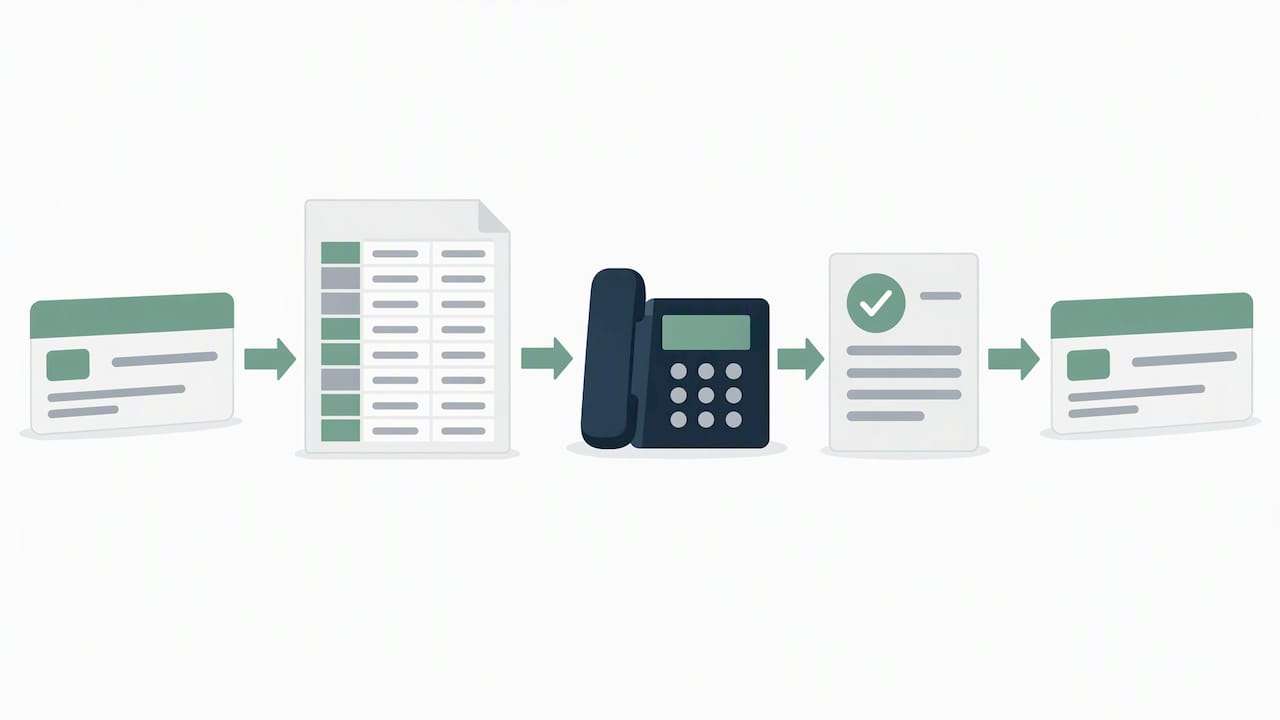
Registration errors are the cheapest denials to prevent, because the fix happens before the claim exists. Give intake staff a fixed routine:
- Run a real-time eligibility check on every visit, even for returning patients.
- Confirm the policy number, group number, effective date and subscriber relationship against the card.
- Capture a photo ID, a front-and-back insurance card image and a signed consent and assignment of benefits.
- Flag any plan you do not recognize, and write the question in the account notes.
- Send flagged accounts to a billing lead before the patient leaves, not after the claim is rejected.
Turnover is the quiet driver of registration mistakes, so spot-audit a sample of new registrations regularly after any new hire.
Pro Tip: Keep a one-page “unknown payer” sheet at the desk so staff know exactly who to call, and log every answer for the next patient on that plan.
How do coding and documentation prevent downcoding and modifier denials?
Coders and providers share responsibility here. A clean claim needs a chart that supports the level billed and codes that tell the same story.
- Check CPT and ICD-10 pairs before release. If the diagnosis does not justify the procedure, the payer’s edit will catch it.
- Review modifier 25 use carefully. AMA notes that payer policies often misread it, so the note must show a significant, separately identifiable E/M service. Our own modifier 25 guide walks through examples.
- Let coders review and adjust codes with the provider before submission. AMA points out that no federal rule bars certified coders from this step.
- Watch the ERA for silent downcoding, where the paid amount drops though the billed code looks unchanged.
- Build appeal packets from the clinical note, the CPT guidance and a standardized letter based on AMA’s appeal guidance.
When do eligibility, prior authorization and payer policy cause denials?
Eligibility confirms that coverage is active. Authorization confirms that the payer agreed the service is covered. A patient can pass the first check and still fail the second, which is why teams that treat them as one step keep seeing “no auth on file” denials.
- Build an authorization matrix by payer and procedure, and review it quarterly.
- Use predetermination where a payer offers it for higher-cost services.
- Schedule a review of high-risk procedures before the date of service, not after discharge.
- Record payer quirks such as frequency limits or site-of-service rules in one shared place.
Payers are asking for heavier documentation with each cycle. CAQH prior-authorization material describes rising documentation demands and inconsistent reasoning, along with practices that cut auth-related denials through early checks and automation. Our urgent care billing checklist lays out the pre-visit routine we recommend.
What should you do when a claim is denied?
Work every denial through the same sequence so nothing ages out:
- Read the ERA and note the CARC and RARC.
- Decide who is responsible: the payer, the patient or an error on your side.
- Choose the path: correct and resubmit, appeal, or transfer to patient balance.
- Log the claim, the code, the action and the deadline in your tracking sheet.
- Escalate anything unresolved at a set interval.
Know the Medicare rules before you choose. Minor clerical errors can be handled as reopenings instead of formal appeals, and reopenings do not pause your appeal clock. Claims filed after the Medicare window are generally treated as untimely, and those denials are not appealable. The Medicare appeals process sets the redetermination and reconsideration windows you must track.
An appeal packet should include:
- A short cover letter stating the error and the requested outcome
- The ERA page and the original claim
- The clinical note and any ADR response
- The CPT or payer-policy language you rely on
Which tools and reports speed denial recovery?
Technology turns scattered denials into patterns you can fix. Standard electronic transactions separate a rejected claim (never accepted, fix and resend) from a denied claim (processed and refused, correct or appeal).
- Process ERAs electronically, and configure your practice management system so it does not auto-write-off items worth appealing, as AMA’s ERA tips advise.
- Track acknowledgements from the clearinghouse so rejections surface within a day.
- Build a denial dashboard broken out by payer, CARC and provider.
- Set alerts for high-dollar and repeat denials.
CAQH reports that payer use of automation and AI in claim review is growing, which can mean more automated denials and repeat submissions. Plan for targeted appeals, not one-size-fits-all resubmission. Our denial management strategies cover the KPIs worth watching.
How do you keep denial rates low over time?
Sustained results come from routine, not heroics. Assign roles and a cadence:
- Name one person to review ERAs daily and reconcile payments to your practice management system weekly.
- Audit a sample of charts for coding accuracy and a sample of registrations each month.
- Keep an appeals library with approved letters and AMA-based templates, ranked by dollar value.
- Review denial trends by payer every quarter and update your front-desk and coding checklists.
- Escalate to a specialist when the same denial keeps returning despite corrective action or when volume outruns your staff.
Pro Tip: Audit your write-off settings twice a year. A single misconfigured adjustment code can quietly bury appealable money.
For a deeper look at the operating model, see our guide to urgent care revenue cycle management.
Why we treat denials as a process problem
Our approach pairs rapid remittance review with coder and provider workflows tailored to each clinic, and denial analytics that show which payer and which code keep costing you money. We believe most denials are process failures, not payer mysteries, and process failures can be fixed.
— One For All Medical Billing
How we help urgent care centers get paid faster
We run urgent care medical billing and revenue cycle management for clinics that want fewer denials and quicker payment, including denial management, analytics, coding and credentialing assistance. Ask us for a revenue-cycle assessment, and we will show you where your claims leak. Reach out today and let us review your denial reports with you.
This article is general information, not a substitute for advice from a qualified financial advisor. Consult a qualified financial professional about your own circumstances before acting on anything here.
FAQ
What is the most common reason for claims being denied?
Registration and eligibility errors lead most lists, followed by coding mistakes and missed filing deadlines. Fixing intake checks usually removes the largest share of avoidable denials. CAQH reports that 12% of claims were denied in 2023.
What are the top denial types in medical billing?
The recurring types are eligibility or coverage, incomplete patient data, coding and modifier errors, missing prior authorization, and late filing. Missing documentation after an ADR is a close sixth. Each one maps to a CARC and RARC pair on your ERA.
Can you appeal a denial for late filing?
Under Medicare, untimely-filing denials are generally not appealable. Extensions to appeal deadlines require good cause and strong evidence. Commercial payers set their own limits, so check each contract.
Should you correct a denied claim or appeal it?
Correct and resubmit when the error is clerical, such as a wrong ID or missing field. Appeal when the payer applied a policy wrongly, as with downcoding or modifier 25 disputes. Record the deadline either way.
Sources
- Uhin
- Setting the record straight on proper use of modifier 25 | American Medical Association
- Payer evaluation and management (E/M) downcoding programs: What you need to know

