
table of contents
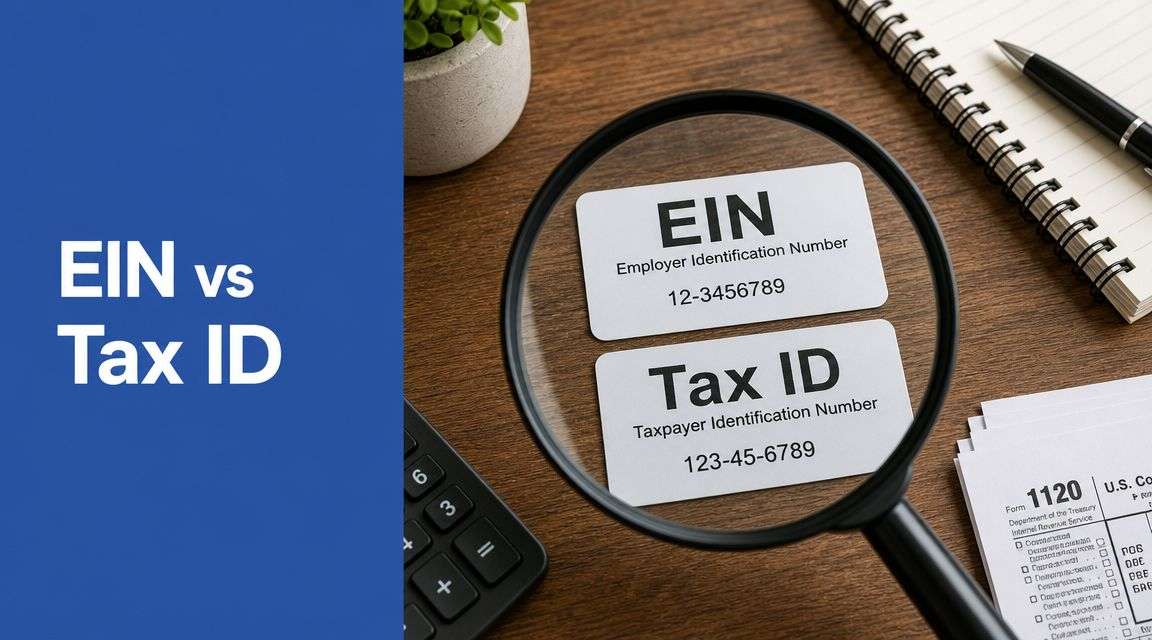
An EIN is a type of tax ID, but they are not always the same thing. An EIN is a nine-digit federal identifier in the format XX-XXXXXXX, while “tax ID” is the broader label people use for several different taxpayer numbers.
If you manage a medical practice, you've probably seen this confusion in real time. A payer form asks for “Tax ID,” a bank asks for a federal number, credentialing paperwork asks for one identifier, and your providers keep mentioning their NPI. That's where mistakes start. In healthcare, using the wrong number can slow enrollment, delay payments, create documentation mismatches, and expose information you didn't mean to share.
What Is the Difference Between an EIN and a Tax ID
A lot of practice managers ask the same question: Is EIN the same as Tax ID? The direct answer is no. An Employer Identification Number, or EIN, is one specific kind of tax ID. “Tax ID” is the general term people use when they mean a number used for tax identification.
The confusion usually starts with a form. You get a W-9 request from a vendor, a payer enrollment packet, or banking paperwork, and the line says “Tax ID Number.” You pause because several numbers may be floating around your practice. There's the business EIN, a provider's Social Security Number, and the NPI. Those numbers are not interchangeable.
For a healthcare practice, this distinction matters because each number serves a different job in your operations. Your EIN identifies the business entity for tax and financial purposes. An individual provider's SSN identifies that person. An NPI identifies a provider or organization for healthcare transactions, not for federal tax identity.
Where Practices Usually Get Tripped Up
The most common mistake is assuming every request for “tax ID” means the same number. It doesn't. The right answer depends on who is asking and why.
- Banking Requests: A bank usually wants the practice's federal business identifier.
- Payroll Setups: Payroll providers need the entity's tax identifier for wage reporting and tax processing.
- Payer Forms: Payers often want the tax ID tied to the billing entity that will receive payment.
- Provider Records: Individual clinicians may still have separate personal identifiers that belong only on individual records.
In a medical practice, the safest habit is simple: match the number to the role. Use the EIN for the business, the NPI for healthcare identification, and personal identifiers only when a form clearly requires the individual's own tax information.
That's the operational lens you want. Don't think of these as paperwork details. Think of them as identity controls for your revenue cycle, payroll, banking, and compliance files.
The Family of Tax IDs Explained
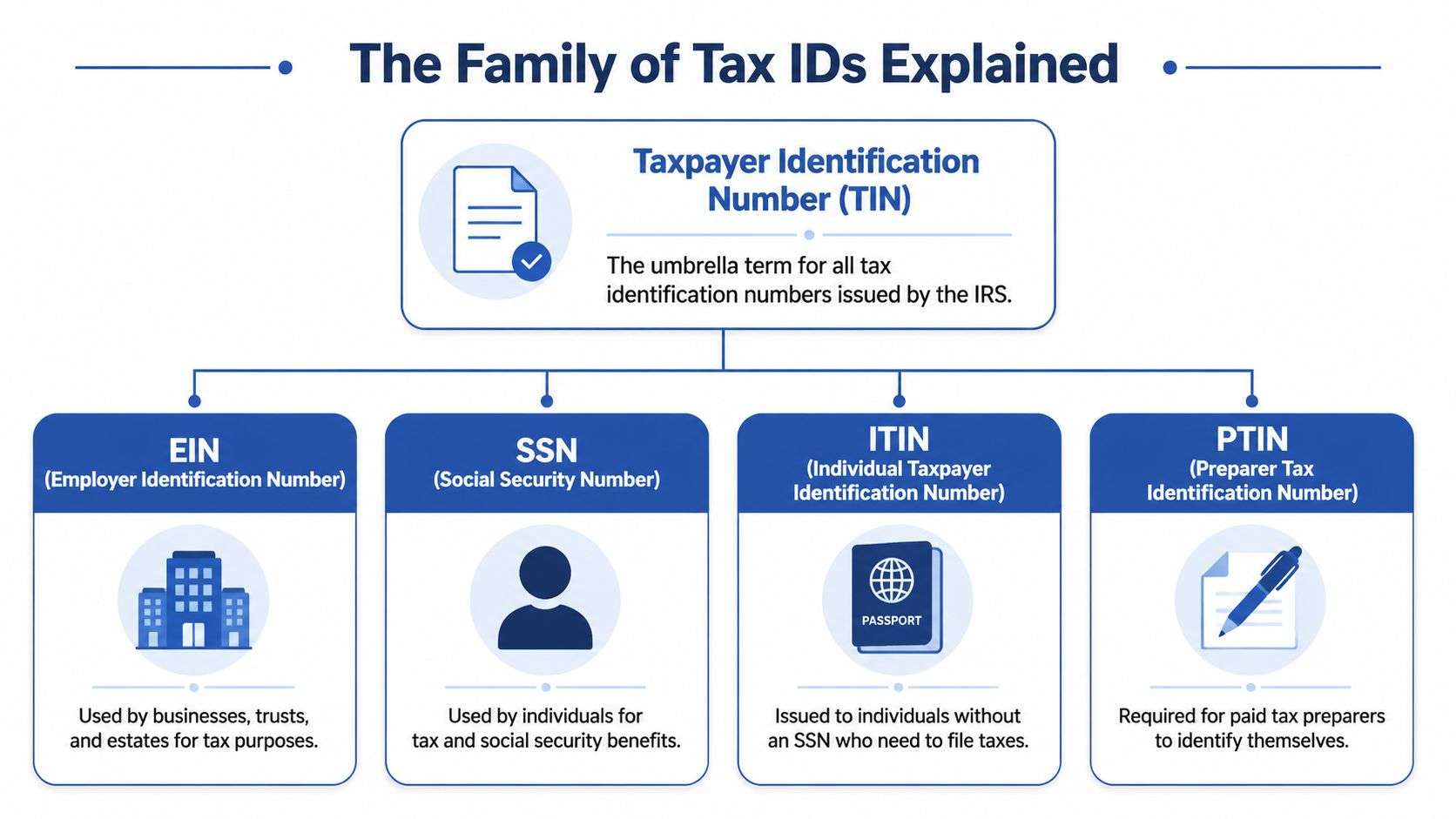
The easiest way to understand this is to think of TIN as the family name. A Taxpayer Identification Number is the umbrella category. Under that umbrella sit several different identifiers, each built for a different purpose.
The IRS explains that an EIN is not the same as every kind of tax ID. It is a specific type of TIN, and the broader tax-ID category can also include numbers such as an SSN or ITIN. The IRS also defines an EIN as a nine-digit number in the format XX-XXXXXXX used to identify the tax accounts of employers and certain other entities, and notes that EINs are used by employers, sole proprietors, corporations, partnerships, nonprofit associations, trusts, estates, government agencies, certain individuals, and other business entities (IRS publication on employer identification numbers).
The Main Members of the Tax ID Family
Here's the clean way to separate them in your head:
- EIN: This is the business-side federal tax identifier. For a practice entity, this is usually the number that ties to payroll, banking, tax filings, and many payer records.
- SSN: This belongs to an individual person. A physician owner may have one personally, but that doesn't make it the right identifier for the practice entity.
- ITIN: This is another individual tax identifier for certain people who need to file taxes but don't have an SSN.
- PTIN: This is used by paid tax preparers to identify themselves in their professional filing role.
Key Takeaway: All EINs are tax IDs, but not all tax IDs are EINs.
That one sentence clears up most of the confusion behind “is EIN the same as tax ID.”
Why This Matters in Daily Administration
When a staff member sees “Tax ID” on a form, they shouldn't guess. They should verify what kind of taxpayer the form is identifying. Is it the practice entity? The individual provider? A vendor? A tax preparer? Those are different identities.
That's also why it helps to use a process for reliable tax ID verification before your team finalizes onboarding records, W-9 files, or vendor setup. Verification discipline reduces avoidable mismatches. If your broader startup checklist also includes licensing questions, this guide on whether you need a business license can help clarify a separate, but related, compliance issue.
Your EIN in Action Key Business and Financial Tasks
A practice's EIN becomes important the moment the business starts acting like a business. Not in theory. In real workflows.
Say your clinic hires its first front-desk employee. Payroll can't be built around a provider's personal identity if the business is the employer. Or say the practice opens a dedicated operating account to separate patient payments, payroll, rent, and vendor expenses from an owner's personal finances. The business needs its own federal identifier in those relationships.

The Jobs Your EIN Commonly Handles
In a healthcare practice, the EIN usually shows up in a short list of critical tasks:
- Federal Tax Filing: The entity uses its own identifier for business tax administration.
- Payroll Processing: If your practice pays employees, the business identifier anchors wage reporting and payroll records.
- Business Banking: Financial institutions usually expect the practice to show up as a separate business customer.
- Contractor Reporting: When the practice pays outside consultants or other non-employees, the entity's tax identity belongs in those reporting workflows.
- Vendor Setup: Labs, software providers, billing vendors, and landlords may request a W-9 that reflects the legal business identity receiving payments or entering into a contract.
Why Using a Personal SSN Can Create Problems
Here's where I tend to get blunt with administrators. If a business transaction belongs to the practice, don't let it drift onto a provider's personal identifier just because it's convenient.
That shortcut creates operational mess. Records stop lining up. Ownership changes become harder to manage. Banking documentation can conflict with tax records. And from a privacy standpoint, you're exposing a person's sensitive information in places where the business should stand in its own name.
A simple example is a locum tenens physician who helps your group under an independent arrangement. The related forms must identify the right payor and payee. The same goes for management agreements, consulting contracts, and leased-space arrangements. If your team drafts these documents internally, tools that streamline contract generation with AI can help standardize language before legal review. On the accounting side, practices also benefit from understanding related financial topics like MACRS depreciation when assets and tax treatment enter the picture.
The EIN is not just a tax form field. It is the practice's financial identity inside payroll systems, bank files, vendor records, and payment documentation.
A Good Internal Rule
Give your staff a simple rule they can follow without hesitation:
- If the practice is the party to the transaction, start with the EIN.
- If the individual clinician is the party, confirm whether the form requires the person's own taxpayer number.
- If the request involves healthcare billing identity, check whether the form is actually asking for an NPI instead.
That discipline prevents a surprising number of downstream headaches.
Using Your EIN with Payers and Clearinghouses
A key distinction in healthcare compared to general business advice is found in medical billing, where your EIN doesn't work alone. It sits next to other identifiers, especially the NPI, and each one answers a different question.
The EIN identifies the tax entity. The NPI identifies the provider or organization in healthcare transactions. If your team blends those roles together, payer enrollment records can become inconsistent, and inconsistent records are one of the fastest ways to trigger avoidable delays.

Credentialing and Enrollment
When a payer enrolls your practice, it needs to know more than who rendered care. It also needs to know which entity is billing and which entity should receive payment. That's where the EIN becomes operationally important.
For example, a physician may render services under an individual NPI, while the group practice bills under the organizational setup tied to its payer enrollment records. If the tax identity attached to the billing entity doesn't match what the payer has on file, your claims team may face rejections, payment holds, or enrollment follow-up.
The Relationship Between EIN and NPI
A clean way to explain it to staff is this:
- NPI answers: Who is the provider or organization in the healthcare system?
- EIN answers: Which tax entity is this for payment and tax reporting purposes?
Those are related, but they are not the same.
A solo physician can have an individual Type 1 NPI. A group practice can have an organizational Type 2 NPI. The EIN generally ties to the business entity behind the billing relationship, while the NPI identifies the healthcare party in the claim and enrollment ecosystem.
If a payer file shows one legal entity, the W-9 shows another, and the claim is submitted under a different organizational identity, payment problems usually follow.
Clearinghouse Workflows and Claim Accuracy
This matters inside clearinghouse workflows too. A clearinghouse checks claim data against formatting and payer-routing rules, but it can't fix a bad identity structure for you. If the tax ID on file with the payer doesn't align with the billing entity details your staff is sending, claims can stall before anyone gets to the medical necessity or coding issue.
If your team wants a refresher on that process layer, this overview of what a clearinghouse is in medical billing is a useful operational reference.
HIPAA and Minimum Necessary Handling
HIPAA doesn't turn an EIN into protected health information by itself, but that doesn't mean your team should treat it casually. In a healthcare setting, EIN data often travels with enrollment packets, W-9s, contracts, and account credentials. Those documents can also contain provider data, ownership details, addresses, and banking information.
The practical rule is to apply the same disciplined access habits you use for other sensitive administrative records. Share the EIN where it is legitimately required. Don't circulate it in open email threads or broad staff messages just because “it's only the tax ID.”
A Simple Guide to Obtaining Your EIN from the IRS
For most eligible U.S.-based businesses, the cleanest route is the IRS online application. The IRS says eligible businesses can obtain an EIN online for free in minutes, while faxed applications are typically returned in about 4 business days and mailed applications take approximately 4 weeks. The SBA also notes that businesses generally need a federal tax ID to pay federal taxes, hire employees, open a bank account, and apply for licenses (IRS EIN application guidance).
That timing matters when a practice is trying to open a bank account, finalize payroll, or complete enrollment paperwork on a deadline. If you can apply online, do that first.
What To Gather Before You Start
Most delays come from missing information, not from the application itself. Before anyone sits down to complete the process, collect the core business details in one place.
- Legal Business Name: Use the exact legal name of the practice entity.
- Business Address: Make sure the address matches your formation and tax records.
- Responsible Party Information: Have the responsible party's identifying information ready.
- Entity Type: Know whether the business is operating as a corporation, partnership, LLC, or another structure.
- Reason for Applying: Be ready to identify why the business needs the EIN.
- Primary Activity: The IRS will expect a general description of what the business does.
How To Keep the Process Smooth
The best administrative habit is consistency. Use the same legal name, address, and entity details that appear in your formation records, banking documents, and payer enrollment materials. Small mismatches create bigger cleanup projects later.
If you're still working through broader formation questions, state-specific legal resources like this article on starting a business in CT can help frame the business setup side. If your practice is operating under a trade name rather than its legal entity name, this guide on how to get a DBA is also worth reviewing.
Practical Rule: Apply for the EIN after your entity details are settled enough that you can use the same identity across tax, banking, and payer records.
What Happens After You Receive It
Once the EIN is issued, treat it like a permanent core record. Save the confirmation notice in a controlled location. Update your W-9, payroll setup, bank records, payer files, and vendor onboarding documents as needed. Then make sure your leadership team knows where the official record lives.
That step sounds basic, but lost confirmation letters cause more administrative churn than they should.
Safeguarding Your Practice's Financial Identity
A practice's EIN isn't something to pass around loosely. It may not be the same as a clinician's SSN, but it still anchors the legal and financial identity of the business. If the wrong person gets it along with supporting business details, they may have enough information to create serious trouble.
In medical practices, the EIN often appears on W-9s, payer documents, bank forms, and vendor onboarding packets. Those records can move through billing, credentialing, accounting, and ownership files. That means access should be limited to people who actually need it.
Who Usually Has a Legitimate Need
Most practices can keep this simple. A valid request often comes from a narrow group:
- IRS and Tax Professionals: For tax reporting and entity records.
- Banks and Payment Partners: For account setup and financial verification.
- Payroll Providers: For wage and tax administration.
- Payers and Clearinghouse-Related Enrollment Workflows: When the billing entity's tax identity must be documented.
- Vendors Requesting a W-9: When they need the practice's payee information for their records.
Good Handling Habits
You don't need an elaborate policy to improve security. You need consistent behavior.
- Limit Access: Keep the EIN in controlled systems and role-based files.
- Share Complete Documents Carefully: If you send a W-9, confirm the recipient and purpose first.
- Avoid Casual Transmission: Don't place the EIN in unnecessary email chains or chat messages.
- Centralize Recordkeeping: Store the official confirmation and current W-9 where authorized staff can find them without asking around the office.
If fraud prevention is already on your radar, these practical internal controls to prevent fraud are a useful complement to EIN handling procedures.
A stolen business identity can disrupt banking, vendor relationships, tax records, and payer administration long before anyone notices the root problem.
Common Questions About EINs in Medical Practices
Do I Need A New EIN If My Practice Changes Its Name Or Structure
Sometimes yes, sometimes no. A name change by itself may not trigger a new EIN, but a legal structure change can. The key question is whether the legal entity itself changed. If your current tax, banking, and payer records no longer describe the same entity, stop and confirm requirements before you keep filing under the old number.
As A Solo Provider, Can I Just Use My SSN Instead Of Getting An EIN
Some solo practitioners ask this because they are small and want fewer administrative steps. The cleaner operational answer is usually to separate the business identity from the individual whenever the practice is functioning as a business with contracts, banking, vendor records, or payer relationships. That separation makes administration easier and reduces unnecessary exposure of personal information.
How Does The EIN Relate To Type 1 And Type 2 NPI Numbers
They serve different purposes. The EIN identifies the tax entity. The NPI identifies the provider or organization in healthcare transactions. An individual clinician's Type 1 NPI doesn't replace the practice EIN, and an organizational Type 2 NPI doesn't replace the EIN either. Your billing and credentialing files need each identifier in the right place.
What If I Lost The Original IRS EIN Confirmation Letter
Start with your internal records. Check prior tax filings, payroll setup files, bank onboarding documents, and credentialing packets. If your practice has gone through ownership or administrator turnover, confirm that the number in active use matches the legal entity's records before you reuse it broadly.
What Should My Staff Do When A Form Simply Says Tax ID
Teach them not to guess. They should identify who the form is trying to identify: the practice entity, the individual provider, or another party. That one pause can prevent errors in contracting, enrollment, and payment setup.
If your team wants fewer billing delays, cleaner payer enrollment records, and stronger support across credentialing and revenue cycle operations, One For All Medical Billing can help you tighten the administrative details that keep claims and payments moving.

