

table of contents
Emergency department billing is the coordinated process of assigning ED E/M and facility codes, documenting resource use, and submitting compliant claims that reflect hospital resource consumption. Your single most important starting point is to align your facility-level guidelines to CMS expectations and No Surprises Act requirements before touching a single claim. Under federal law (42 USC 300gg-111), emergency services must be provided without prior authorization, and balance billing protections apply to most out-of-network encounters. Professional billing runs on CPT codes 99281–99285; facility billing runs on resource consumption, not physician intensity. Get those two tracks straight, and most downstream problems shrink considerably.
Here are the five actions to take now:
- Audit your current ED documentation against your written facility-level guidelines — if those guidelines do not exist in writing, create them before your next payer audit.
- Confirm payer-specific policies for each major commercial contract, since payer bulletins sometimes conflict with CMS guidance and your contract terms.
- Verify that Place of Service (POS) codes and modifiers are correct on every claim type, including any telehealth encounters originating from the ED.
- Train nursing staff on time capture and intervention documentation — this is where facility-level revenue is won or lost.
- Review No Surprises Act obligations: good-faith estimates for self-pay patients, required notices, and your independent dispute resolution (IDR) readiness.
The sections below cover each of these areas in depth: CPT and facility codes, documentation requirements, facility versus professional billing governance, payer and regulatory rules (including the No Surprises Act), telehealth billing, denial management, a quick-reference code cheat sheet, and RCM outsourcing value.
Key Takeaways
Defensible emergency department billing requires written facility-level guidelines based on resource consumption, correct CPT and modifier selection, No Surprises Act compliance, and a denial management system tied to measurable KPIs.
| Point | Details |
|---|---|
| Facility vs. professional billing | Facility levels must reflect hospital resource consumption, not physician E/M complexity — these two numbers can and should differ. |
| No Surprises Act obligations | Providers must post required notices, issue good-faith estimates for self-pay patients, and meet IDR deadlines for out-of-network disputes. |
| Documentation is the foundation | Nursing intervention timestamps, infusion start/stop times, and procedure records are what support facility levels under audit. |
| Top denial drivers | Documentation gaps, facility-level mirroring, wrong modifiers, and timely filing failures account for the majority of ED claim denials. |
| One For All Medical Billing | Provides specialty-focused ED billing and RCM with a 90% clean claim rate, denial management, and No Surprises Act compliance support. |
What every coder must know about emergency department billing codes
Professional E/M codes: 99281–99285
The five primary ED professional E/M codes map to visit complexity, and the 2021 AMA CPT revisions shifted the selection criteria toward medical decision-making (MDM) or total time rather than the older history/exam/MDM triad. Here is how they break down in practice:
- 99281: Minimal complexity MDM; self-limited or minor problem. Think a patient presenting for a splinter removal with no complicating factors.
- 99282: Low complexity MDM; one stable chronic illness or acute uncomplicated illness.
- 99283: Moderate complexity MDM; one or more chronic illnesses with exacerbation, or an acute illness with systemic symptoms.
- 99284: Moderate-to-high complexity MDM; an undiagnosed new problem with uncertain prognosis, or prescription drug management.
- 99285: High complexity MDM; a problem that poses a threat to life or bodily function. This is your chest pain rule-out MI, your altered mental status workup, your multi-system trauma.
The CMS Evaluation and Management Services Guide remains the foundational reference for documentation expectations tied to each level. Coders should keep it bookmarked alongside the AMA CPT codebook.
Critical care codes: 99291 and 99292
Critical care billing requires that the physician provide direct care for a critically ill or injured patient whose condition poses a high probability of imminent or life-threatening deterioration. The first 30–74 minutes of critical care time on a given date bills as 99291; each additional 30-minute block bills as 99292. Time must be documented precisely — start and stop times, not just total elapsed minutes — and simultaneous staff time cannot be counted toward the physician’s critical care time metric.
Facility billing: CPT ranges, G-codes, and revenue codes
Hospital facility billing for the ED uses the same CPT code ranges (99281–99285) for Type A emergency departments. Type B departments (those that do not meet Medicare’s definition of a dedicated emergency department) may use G-codes or other HCPCS-level codes depending on payer policy. Revenue code 045x is the standard series for ED facility claims under OPPS, and Medicare’s Claims Processing Manual, Chapter 4 details the revenue code assignments, condition codes, and modifier usage that route claims correctly through the Outpatient Code Editor.
ICD-10 diagnosis codes anchor medical necessity on both professional and facility claims. HCPCS Level II codes cover supplies, drugs, and certain services not captured by CPT. Both systems interact with OPPS packaging rules — meaning some ancillary services (certain labs, imaging reads) may be bundled into the facility payment rather than paid separately.
Three clinical vignettes
Vignette 1 — Low-acuity visit: A 24-year-old presents with a minor laceration requiring irrigation and simple closure. No labs, no imaging, straightforward MDM. Professional code: 99282. Facility level: typically Level 2, driven by the nursing intervention (wound care, closure assist) rather than the physician’s note complexity.

Vignette 2 — Moderate-acuity visit: A 58-year-old with a history of hypertension presents with chest pain. The workup includes an EKG, troponin series, and chest X-ray. MDM is moderate-to-high. Professional code: 99284 or 99285 depending on final MDM documentation. Facility level: Level 4 or 5, driven by multiple nursing interventions, IV access, serial labs, and monitoring time.
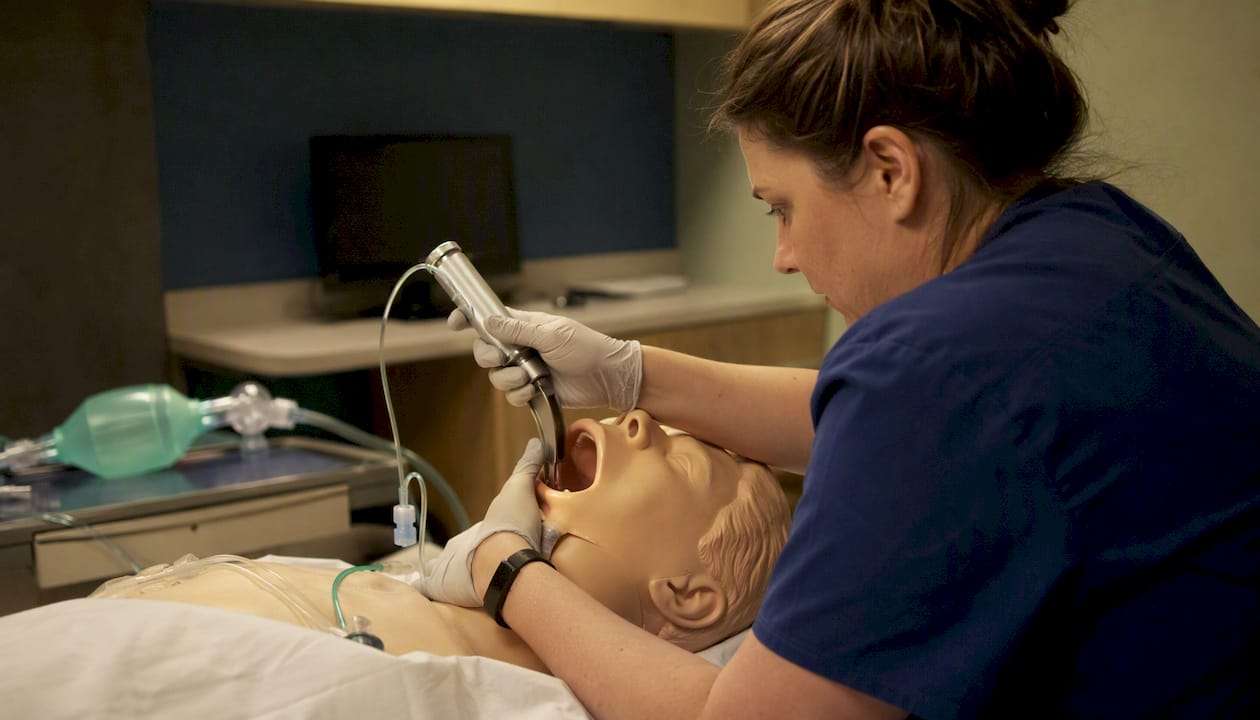
Vignette 3 — Critical care: A 70-year-old arrives in respiratory failure requiring intubation and vasopressor initiation. The physician documents 45 minutes of critical care time with start/stop notation. Professional code: 99291. Facility level: Level 5 plus separately payable procedure codes for intubation (31500) and critical care nursing resource capture.
What documentation actually supports your ED E/M levels
The core principle here is simple: document the interventions and the facility resource consumption, not just the physician’s clinical reasoning. A note that reads beautifully from a diagnostic standpoint but omits nursing interventions, medication administration times, and ancillary touchpoints will not hold up under a facility-level audit.
Required documentation elements
Every ED chart should contain:
- Chief complaint, clearly stated in the patient’s own words or the triage nurse’s language
- MDM elements for professional coding: number and complexity of problems, amount and complexity of data reviewed, risk of complications
- Nursing interventions: IV placement, medication administration (drug name, dose, route, start and stop times), wound care, splinting, monitoring frequency
- Timed services: infusion start and stop times, critical care time blocks, observation time if applicable
- Procedures performed, with the performing provider documented
- Rechecks and reassessments, timestamped
- Disposition and follow-up instructions
Pro Tip: For IV infusion and hydration services, the nursing note must capture the exact start time, stop time, and volume infused. A note that says “IV fluids given” without timing cannot support a separately billable infusion code. Build a structured nursing documentation field in your EHR that requires these entries before the chart can be closed — this single workflow change often recovers meaningful infusion revenue that was previously undocumented.
Chart review checklist for coders
When validating an ED level assignment, run through these questions:
- Does the chief complaint match the diagnosis codes on the claim?
- Are nursing interventions documented with timestamps that support the facility level assigned?
- Is the MDM complexity consistent with the CPT code selected by the physician?
- Are separately billable procedures (laceration repair, intubation, fracture reduction) coded and linked to the correct diagnosis?
- Are infusion/hydration start and stop times present and legible?
- Does the critical care note include start/stop times and exclude time spent on separately billable procedures?
- Is the disposition documented and consistent with the level of service billed?
The CMS E/M guide and the ACEP facility-level coding guidelines together form the two-document foundation for any internal audit protocol.
How facility ED billing differs from professional billing — and how to make your guidelines defensible
Facility codes must reflect hospital resource consumption. That is not a preference — it is a CMS expectation, and it is the single most common misunderstanding that creates audit exposure. A physician may document a Level 3 E/M based on MDM complexity, while the facility legitimately bills a Level 4 or 5 because nursing interventions, IV medications, and monitoring time consumed significantly more hospital resources. These two numbers can and should differ.
CMS expects facility-level ED coding to be based on hospital resource consumption, and hospitals must maintain written, consistently applied, and defensible facility guidelines. There is no single national standard — CMS delegates guideline creation to individual hospitals — but the guidelines must be reasonable, verifiable, and auditable.
What a defensible facility-level guideline must contain
A written facility guideline should include:
- A clear statement that facility levels are based on hospital resource consumption, not physician E/M complexity
- An intervention list or scoring model (point-based, intervention-count, or time-threshold) that maps documented nursing and ancillary activities to facility levels
- Time thresholds for monitoring-intensive stays that trigger level escalation
- A process for periodic review and update, with version control and approval signatures
- Training documentation showing that nursing and coding staff have been educated on the current version
According to AHIMA’s principles for ED coding guidelines, any chosen model — whether intervention-count, point-based, or time-based — must be auditable and must match the operational workflow of the department to withstand payer or CMS review.
Audit checklist: catching common facility-level problems
Run this checklist quarterly:
- Are coders assigning facility levels by mirroring the physician’s E/M code rather than reviewing nursing documentation independently? This is the most common and most auditable error.
- Has the facility-level guideline changed more than once in the past 12 months without documented clinical rationale? Frequent arbitrary changes raise payer red flags.
- Are separately payable services (infusions, procedures) being double-counted in the facility level score?
- Is the written guideline the version currently in use, or has an informal workaround replaced it?
- Can every Level 4 or 5 facility claim be supported by nursing documentation alone, without relying on the physician’s note?
Pro Tip: Coordinate your nursing EHR documentation fields directly with your coding workflow. If the coding team needs IV start/stop times and intervention counts to assign facility levels, those fields should be required entries in the nursing flowsheet — not optional free-text. A 30-minute workflow mapping session between your charge capture team and your nurse informaticist can eliminate months of retrospective documentation chasing.
Key Medicare, Medicaid, and commercial payer rules that affect ED billing
The No Surprises Act changed the financial stakes of out-of-network emergency billing permanently. Balance billing protections now apply to most out-of-network emergency services, cost-sharing must be limited to in-network levels, and the old strategy of relying on chargemaster rates in out-of-network disputes no longer holds. Documentation and objective data now drive IDR outcomes.
No Surprises Act: what providers must do
Under 42 USC 300gg-111, emergency services must be provided without prior authorization, and balance billing is prohibited for most out-of-network emergency encounters. Your compliance checklist:
- Post required patient notices in the ED and on your website
- Provide good-faith estimates (GFEs) to self-pay and uninsured patients before or at the time of service
- Participate in the IDR process when payer disputes arise — this requires meeting strict deadlines, submitting documentation, and attesting to the qualifying payment amount
- Train front-desk and financial counseling staff on GFE requirements and patient rights disclosures
The CMS No Surprises Act rules and fact sheets cover the IDR process, GFE requirements, and provider obligations in detail. These are the documents your compliance team should have on file.
Medicare and CMS-specific rules
Medicare ED billing flows through OPPS for facility claims and through the Medicare Physician Fee Schedule (PFS) for professional claims. Key operational points:
- POS code 23 designates the emergency room of a hospital; using the wrong POS code can reroute a claim to the wrong fee schedule or trigger an edit
- Revenue code 045x is required for ED facility claims under OPPS
- Type A EDs (dedicated emergency departments open 24/7) and Type B EDs (urgent care-style areas that meet Medicare’s definition) have different billing rules and code sets
- The Medicare Claims Processing Manual, Chapter 4 is the authoritative source for revenue code assignments, condition codes, and OPPS claim routing
Medicaid rules vary by state. Confirm your state Medicaid agency’s ED billing policies separately — reimbursement rates, prior authorization exceptions, and level-assignment rules differ materially from Medicare.
Commercial payer risks and contract review
Commercial payers sometimes issue bulletins that change audit approaches or level-assignment criteria in ways that conflict with your contract terms or CMS guidance. As Duane Morris Health Law notes, providers should monitor payer bulletins and preserve contractual and audit rights when payer policy changes appear to contradict established CMS rules. Recommended steps:
- Review every major commercial contract annually for language on ED level-assignment audits, recoupment rights, and dispute resolution timelines
- When a payer bulletin conflicts with your contract or CMS guidance, document the conflict and respond in writing before accepting any recoupment
- Maintain a payer policy log that tracks bulletin dates, effective dates, and your internal response
How to bill telehealth encounters in the emergency department
Telehealth in the ED is payable, but only when you get the POS coding, modifiers, and payer-specific rules right. The HHS telehealth billing guidance for emergency departments is the primary reference for navigating these requirements.
Common scenarios and billing rules
- Tele-neurology or tele-stroke consultations: A remote specialist evaluates a patient physically present in the ED. The consulting physician bills the appropriate consultation or E/M code with the telehealth modifier (modifier 95 for synchronous audio-video). The originating site (the ED) may bill an originating site facility fee using HCPCS code Q3014.
- Remote patient monitoring or virtual check-ins: These typically do not qualify as ED E/M visits and should be billed under their own HCPCS codes (G2010, G2012) when applicable.
- Physician-to-physician consultations (99446–99449, 99451–99452): Inter-professional telephone or internet consultations are separately billable when the consulting physician does not see the patient directly.
Pro Tip: Before billing any telehealth encounter originating from your ED, confirm three things: (1) the payer’s current telehealth coverage policy for ED settings, (2) whether the encounter qualifies as a consultation or an E/M visit under that payer’s rules, and (3) whether the originating site fee is payable. Medicare’s rules differ from most commercial payers, and many Medicaid programs have their own telehealth coverage criteria that changed after the COVID-19 public health emergency ended.
Telehealth billing checklist for ED workflows
- Confirm POS code: POS 23 (emergency room) for the patient’s location; the rendering provider’s location may differ
- Apply modifier 95 for synchronous audio-video telehealth services billed to Medicare and most commercial payers
- Document the technology used, the patient’s consent to telehealth, and the clinical rationale for remote evaluation
- Verify originating site fee eligibility (Q3014) for Medicare claims
- Check payer-specific telehealth coverage lists before submitting — not all payers cover all telehealth modalities in ED settings
- Retain documentation of the remote provider’s credentials and the real-time nature of the encounter
Top denial drivers for ED claims and how to fix them
Most ED claim denials trace back to documentation gaps, incorrect level assignment, modifier misuse, or payer-specific edits. Knowing which category a denial falls into determines how fast you can fix it and whether an appeal will succeed.
The eight most common ED denial drivers
- Insufficient documentation for the billed E/M level: The physician’s note does not support the MDM complexity claimed, or nursing documentation does not support the facility level.
- Facility level mirrors physician E/M without independent nursing documentation: The most auditable error in ED facility billing.
- Missing or incorrect modifier: Modifier -25 omitted when a separately identifiable E/M is billed on the same day as a procedure; modifier -59 or XS missing when two distinct services need unbundling.
- Wrong POS code: POS 23 used for a telehealth encounter, or POS 11 used for a hospital-based ED.
- Timely filing exceeded: ED claims submitted after the payer’s filing deadline, often because of charge capture delays.
- Authorization or eligibility failure: Patient coverage lapsed, or the payer requires notification within a specific window post-emergency visit.
- Upcoding flags from payer edits: A high proportion of Level 4 and 5 claims triggers statistical outlier edits, particularly from commercial payers running comparative data.
- Bundling errors: Separately billing services that OPPS packages into the facility payment, or billing infusion codes without the required administration code hierarchy.
Denial triage checklist
When a denial arrives, classify it before acting:
- Is it a coding issue (wrong code, wrong modifier, wrong POS)? Pull the claim and compare against the payer’s remittance advice remark codes.
- Is it a clinical documentation issue (level not supported)? Pull the chart and run it through your internal audit checklist.
- Is it an eligibility or authorization issue? Check the patient’s coverage on the date of service and confirm any post-service notification requirements.
- Is it a contractual issue (payer applying a policy that conflicts with your contract)? Escalate to your contracting team before appealing.
For common coding errors that generate denials across specialties, the pattern is consistent: the fix is almost always upstream in documentation or charge capture, not in the appeal letter itself.
Appeal steps and required evidence
A strong ED appeal includes:
- The original claim and remittance advice
- The complete medical record, with nursing documentation highlighted
- A written summary of medical necessity that references the clinical presentation, interventions performed, and the facility-level guideline in effect on the date of service
- For level-of-care disputes: a side-by-side comparison of your facility guideline criteria and the documented interventions
- For No Surprises Act disputes: the qualifying payment amount documentation and your IDR submission materials
KPIs to track denial prevention
Monitor these metrics monthly:
- Clean claim rate (target: 90% or higher on first submission)
- Denial overturn rate on first-level appeal
- Days to appeal from denial receipt (keep under 30 days for most payers)
- Denial root-cause distribution by category (coding, documentation, eligibility, contractual)
- Days in accounts receivable (A/R) over 90 days as a percentage of total A/R
Effective revenue cycle management strategies tie these KPIs to weekly team huddles so that denial trends surface before they compound into significant revenue loss.
Quick cheat sheet: ED CPT codes, modifiers, and revenue codes
One well-maintained cheat sheet, shared across your billing and coding team, reduces claim errors faster than any training session. Speed plus accuracy equals fewer denials — and a cheat sheet is the fastest way to keep both.
Professional E/M and critical care codes
- 99281: Minimal MDM; self-limited problem
- 99282: Low MDM; minor or stable acute illness
- 99283: Moderate MDM; acute illness with systemic symptoms
- 99284: Moderate-to-high MDM; new problem with uncertain prognosis
- 99285: High MDM; threat to life or bodily function
- 99291: Critical care, first 30–74 minutes
- 99292: Critical care, each additional 30 minutes
- 99288: Physician direction of advanced life support (ALS) — used when a physician directs paramedics by two-way communication
Facility and ancillary codes
- Revenue code 045x: ED facility services under OPPS
- 96360/96361: IV hydration, initial and each additional hour
- 96365–96368: IV infusion, therapeutic/prophylactic/diagnostic
- 31500: Endotracheal intubation
- Q3014: Telehealth originating site facility fee (Medicare)
- G0380–G0384: Type B ED visit levels (when applicable under Medicare)
High-value modifiers
- Modifier 25: Separately identifiable E/M on the same day as a procedure — required when billing an ED visit and a procedure on the same claim
- Modifier 59 / XS / XE / XP / XU: Distinct procedural service — use the most specific X-modifier when available; modifier 59 is the fallback
- Modifier 95: Synchronous telehealth service via real-time audio-video
- Modifier GT: Via interactive audio and video telecommunication system (used for some Medicaid and older payer contracts)
- Modifier CR: Catastrophe/disaster related — used during declared emergencies
- Modifier GE: Services rendered by a resident without the presence of a teaching physician (relevant for academic medical centers)
Payer caveats by code range
- 99281–99285 (professional): Medicare follows the 2021 AMA MDM or total-time criteria; some commercial payers still apply older history/exam/MDM rules — confirm per contract.
- Revenue code 045x (facility): OPPS packaging rules bundle certain ancillary services; verify which labs and imaging reads are separately payable vs. packaged before billing.
- 96360–96368 (infusions): Hierarchy rules apply — the most resource-intensive infusion is the primary; additional drugs or hours are add-on codes. Missing the hierarchy triggers automatic bundling edits.
- Q3014 (telehealth originating site): Payable by Medicare when the patient is in a qualifying originating site; confirm current Medicare telehealth policy, as rules have evolved since the public health emergency.
For ICD-10 coding guidance that pairs with these CPT selections, the diagnosis code must support medical necessity for the level billed — a mismatch between diagnosis complexity and E/M level is one of the fastest ways to trigger a payer edit.
How specialty-focused outsourced RCM improves ED revenue outcomes
Specialty-focused outsourced billing drives higher clean-claim rates and faster collections because the billing team brings domain expertise in ED-specific codes, modifiers, and payer policies — not a generalist approach applied to every specialty equally. The difference shows up in the metrics within the first billing cycle.
Service capabilities that matter for EDs
A qualified ED billing partner should provide:
- Claims submission with ED-specific edits and scrubbing rules built into the workflow
- Denial management with root-cause categorization and appeal tracking
- Charge capture audits that compare billed facility levels against nursing documentation
- Nursing documentation alignment — working with your clinical informatics team to close documentation gaps
- Payer appeals with clinical summaries written to the payer’s specific criteria
- Reporting that surfaces denial trends, clean claim rates, and A/R aging by payer
Performance metrics to hold a vendor accountable
- Clean claim rate: 90% or higher on first submission is a reasonable benchmark; anything below 85% signals a systemic coding or charge capture problem
- Days in A/R: Track the percentage of A/R over 90 days; a rising trend signals follow-up failures or payer-specific delays
- Denial overturn rate: A well-managed ED billing operation should overturn a significant majority of first-level denials with proper documentation
- Net collections rate: Total collections as a percentage of net charges after contractual adjustments — this is the ultimate measure of billing effectiveness
Facilities that have moved from in-house generalist billing to specialty-focused outsourced RCM consistently report faster reimbursement timelines and lower denial volumes — particularly for complex facility-level and infusion coding where documentation alignment is critical.
For urgent care revenue cycle management workflows that overlap with ED operations, the same principles apply: specialty expertise, payer-specific edits, and proactive denial prevention outperform reactive claim correction every time.
What ED billing leaders should prioritize every single day
The gap between a well-run ED billing operation and a struggling one is rarely about knowing the codes. It is almost always about governance: who owns the facility-level guideline, who reviews it, and how consistently it is applied across every shift and every coder.
From an operational standpoint, two daily priorities matter most. First, chart audits — not monthly retrospective reviews, but a rolling sample of 10–15 charts per week that catches documentation drift before it becomes a denial pattern. Second, coding huddles: a 15-minute weekly touchpoint between your coding team and at least one clinical champion (a charge nurse or ED medical director) to surface documentation questions and resolve ambiguity before claims go out.

For the next 30–90 days, ED billing leaders should focus on three things. Run a full 30-day documentation audit against your current facility-level guideline and quantify the gap between what nursing is documenting and what your guideline requires to support each level. Then confirm that your written facility guideline is the version currently in use — not an informal workaround that has drifted from the approved document. Finally, update your telehealth modifier rules and payer-specific telehealth coverage lists, since these have changed materially since the end of the COVID-19 public health emergency and many teams are still billing on outdated assumptions.
The single most important governance step is aligning clinical staff and coders to one facility-guideline version. When nursing documents to one standard and coders assign levels by a different standard, you get variability — and variability is exactly what payer auditors look for. A single source of truth, reviewed quarterly and signed off by both clinical and coding leadership, is the foundation everything else builds on.
One For All Medical Billing: full-service ED billing and revenue recovery

ED billing is one of the most technically demanding areas in healthcare revenue cycle management — high volume, complex facility-level rules, No Surprises Act compliance obligations, and payer-specific edits that change without notice. One For All Medical Billing provides full-service ED billing and RCM with the specialty expertise to handle all of it, from initial charge capture through final payment posting.
The team delivers:
- Claims submission with ED-specific scrubbing and modifier validation
- Denial management with root-cause tracking and appeal drafting
- Facility-level coding audits aligned to CMS and ACEP guidelines
- Nursing documentation alignment to close charge capture gaps
- No Surprises Act compliance support, including GFE preparation and IDR documentation
- Reporting dashboards that surface denial trends and A/R aging by payer
With a 90% clean claim rate and over 20 years of specialty billing experience, One For All Medical Billing serves healthcare providers across Oklahoma and nationwide — from single-site EDs to large multi-site health systems. If your denial rate is climbing or your facility-level guidelines have not been reviewed in the past year, the right next step is a billing compliance and audit readiness review. Contact One For All Medical Billing to schedule yours.
Sources
These are the primary documents to bookmark for audits, policy writing, and payer disputes. Auditors and payers will reference these same materials.
- Avoid Surprise Healthcare Expenses (DOL/EBSA)
- ED Facility Level Coding Guidelines | ACEP
- Telehealth for emergency departments — Billing (HHS Telehealth)
This article is general information, not a substitute for advice from a qualified financial advisor. Consult a qualified financial professional about your own circumstances before acting on anything here.
FAQ
How does emergency department billing work?
Both claims submit separately, and facility levels may differ from the physician’s E/M level.
What happens if I go to the ER and can’t pay?
Under the No Surprises Act, hospitals must provide good-faith estimates to self-pay and uninsured patients. If you cannot pay, most hospitals offer financial assistance programs, payment plans, or charity care. Federal law prohibits balance billing for most out-of-network emergency services, so your cost-sharing is capped at in-network levels if you have insurance.
Do you pay for ER visits in the USA?
Yes — patients with insurance typically pay a copay, coinsurance, or deductible amount. Uninsured patients receive a bill for the full charges, though hospitals are required to provide good-faith estimates and most offer financial assistance. The No Surprises Act limits out-of-network cost-sharing to in-network levels for emergency services.
What is a typical ER visit bill?
ER bills vary widely based on the level of service, procedures performed, and payer mix. A low-acuity visit (Level 1 or 2) generates a much smaller claim than a high-acuity workup with imaging, labs, and IV medications. Patients with insurance pay their plan’s cost-sharing amounts; the facility and professional components are billed separately, so patients often receive two or more bills from a single ED visit.
What is the difference between facility and professional ED billing?
Professional billing covers the physician’s services and uses CPT codes 99281–99285 based on medical decision-making complexity. CMS requires facility levels to reflect resource consumption, not physician intensity, so the two levels on a single visit can legitimately differ.
Recommended
- A Guide To Medical Billing Denial Management – One For All Medical Billing
- Medical Billing Compliance: A 2026 Guide for Providers – One For All Medical Billing
- Mastering The Medical Billing Process Steps: An 8-Point Guide For 2026 – One For All Medical Billing
- CPT Code 49320: A Guide To Stop Denials – One For All Medical Billing

