
table of contents
If you manage a medical practice, you already know the pattern. Claims go out on time, statements follow, and then cash slows down anyway. A patient mails a check late. A payer deposit lands without clean remittance details. Your team spends hours matching payments, chasing balances, and fixing preventable errors that started with weak enrollment paperwork.
That’s why the eft authorization form matters more than most practices realize. It isn’t just a payment permission slip. It’s a control point inside the revenue cycle. When the form is written clearly, signed correctly, stored securely, and tied to a reliable enrollment workflow, collections get easier to predict and far easier to reconcile.
In practice, the difference shows up in everyday operations. Front desk staff answer fewer billing calls. Billing teams spend less time reworking returned payments. Administrators get cleaner reporting on what was collected, what failed, and what still needs follow-up. The form itself is simple. The process around it is what determines whether EFT becomes a cash flow advantage or another compliance headache.
Streamlining Payments Beyond Paper Checks
Most practice managers don’t decide to modernize payments for the sake of novelty. They do it because paper checks keep creating friction.
A patient gets a statement, puts it aside, and mails a payment days later. Another payment arrives without enough detail to post quickly. An insurer sends funds, but the remittance and deposit don’t line up cleanly in the system. None of that is unusual. It’s what billing teams deal with every week when payment collection depends on paper, manual posting, and repeated follow-up.
An eft authorization form changes that workflow. It gives the practice documented permission to collect approved patient balances electronically and supports a more organized payment process on the payer side as well. That reduces guesswork. It also helps the team stop treating payment collection like a series of one-off events.
For administrators trying to streamline business processes, payment authorization is one of the clearest places to start. The gains aren’t only financial. Staff time improves too, because fewer people are touching the same account to answer the same question.
There’s also a practical link between EFT and remittance visibility. When the payment side is tighter, it becomes easier to use electronic remits well and avoid posting delays. Practices that want cleaner matching between deposits and insurance payment data usually benefit from understanding how ERA medical billing works alongside EFT setup.
Paper checks don’t just slow payment. They multiply handoffs, and every handoff creates another chance for delay or posting error.
The strongest workflows treat EFT authorization as part of revenue cycle design, not as a standalone form. That’s where real stability starts.
What Goes Into A Compliant EFT Authorization Form
A compliant eft authorization form has to do two jobs at once. It has to be legally clear enough to prove consent, and it has to be operationally specific enough that your staff can use it without creating rework.
That’s where many forms fail. They look complete at first glance but leave room for disputes, posting confusion, or processor rejection. While many guides state that non-compliant EFT forms will be rejected, they rarely quantify the impact. The primary reasons for rejection often include simple but critical errors like photocopied signatures, missing practitioner titles on the form, or a mismatch between the authorized representative and the signatory, creating significant administrative friction and payment delays for practices, as discussed in this review of common EFT form rejection issues.
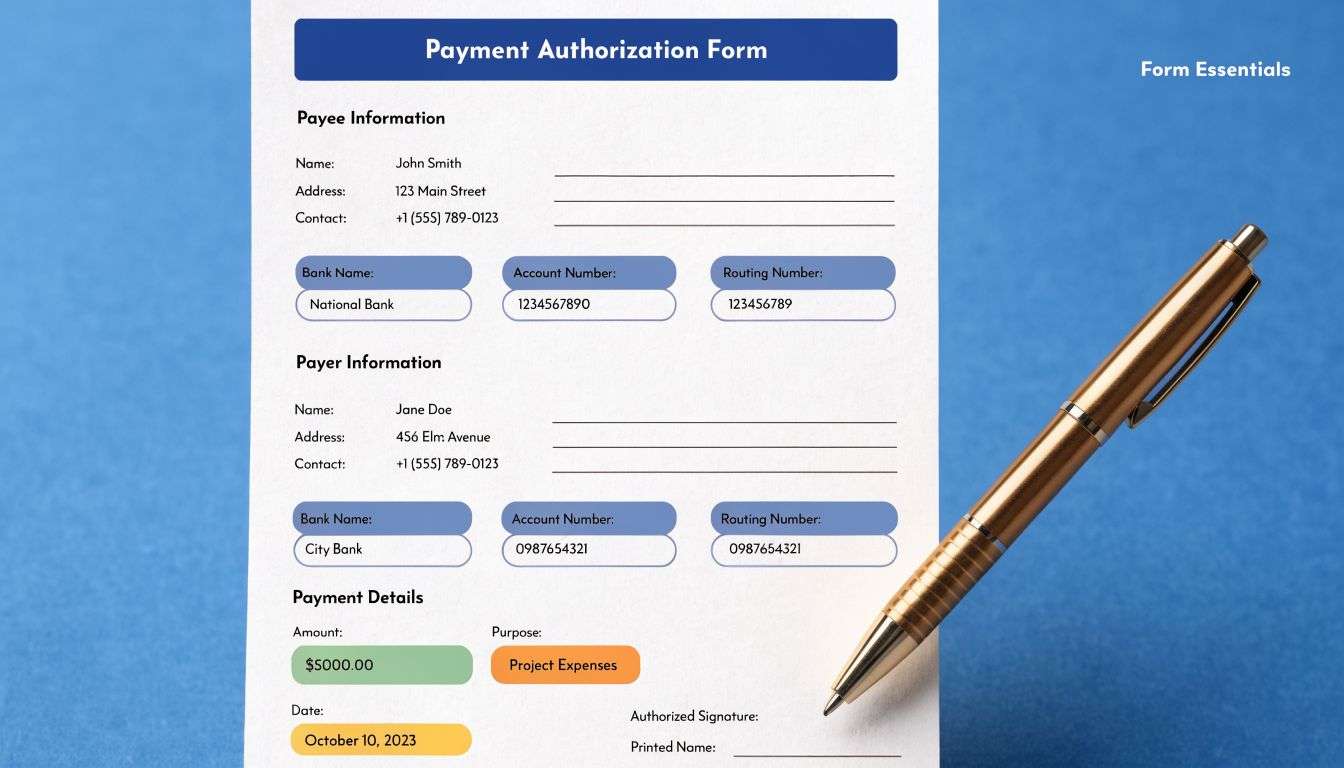
Core Fields That Should Never Be Vague
At minimum, the form should identify the patient or authorized account holder, the practice receiving payment, and the bank account details needed for processing. It should also state whether the authorization covers a one-time payment or recurring debits.
For recurring payments, clarity matters most. The form should spell out:
- Payment type: One-time debit, recurring debit, or post-service balance collection
- Amount terms: Exact amount when known, or a clearly defined method for determining the amount
- Timing: Specific date or event trigger, such as after claim adjudication or monthly installment date
- Frequency: Weekly, monthly, per statement cycle, or another defined schedule
- Cancellation process: How the patient withdraws authorization
- Signature and date: Current, original, and attributable to the correct party
If you use digital intake, your wording should still be as plain as a paper form. The signature method changes. The requirement for clear consent doesn’t.
Language That Works In Practice
Good authorization language is specific and readable. Bad language tries to cover every scenario and ends up being too broad to defend later.
A practical example for a recurring patient payment section might read like this:
I authorize the practice to debit my designated bank account for amounts I owe for medical services, including copays, coinsurance, deductibles, and approved payment plan balances, according to the schedule described on this form. I understand how to revoke this authorization and that revocation will apply to future debits.
That kind of statement works because it ties consent to actual charges and a defined process. It doesn’t rely on a generic “I agree to be charged” sentence that leaves too much open to interpretation.
Practices should also separate financial consent from privacy disclosures and general intake paperwork. If everything is buried in a single signature packet, disputes become harder to defend. That’s one reason teams reviewing healthcare payment workflows often benefit from understanding how payment forms intersect with the HIPAA Enforcement Rule.
The Fields That Protect Operations, Not Just Compliance
Some details don’t look important until they go missing. Then they hold up payment.
Include these operational items on the form or in the associated workflow:
- Account type: Checking or savings
- Routing and account number entry standards: If entered manually, require double verification
- Voided check or bank letter when needed: Useful for validating the MICR line during setup
- Responsible party designation: Especially important for minors, dependents, and guarantor-based billing
- Staff verification notes: A field for who reviewed the authorization and when
Practical rule: If your team has to guess what the patient approved, the form isn’t ready to use.
If you want a broader view of how payment mandates are typically structured outside healthcare, it can help to understand direct debit forms and compare how consent language, cancellation terms, and account verification are handled in other regulated payment environments.
What A Strong Form Avoids
Weak forms usually have one of three problems. They’re too short, too vague, or too disconnected from the actual billing workflow.
Avoid forms that:
- Authorize unlimited charges without describing what kinds of balances qualify.
- Omit cancellation instructions, leaving staff to improvise later.
- Rely on photocopied or mismatched signatures, which creates trouble during disputes.
A compliant form doesn’t need to be long. It needs to be precise. That’s what keeps collection moving when the account becomes complicated.
A Step By Step Guide To Payer And Patient Enrollment
Monday morning starts with a familiar problem. The payer says EFT is active, but the deposit posts to the wrong tax ID. Two patients call about charges they say they never approved. Billing pauses to investigate, cash posting slows down, and A/R ages for reasons that had nothing to do with claim coding. In practice, enrollment errors create payment delays long before anyone notices them on a report.
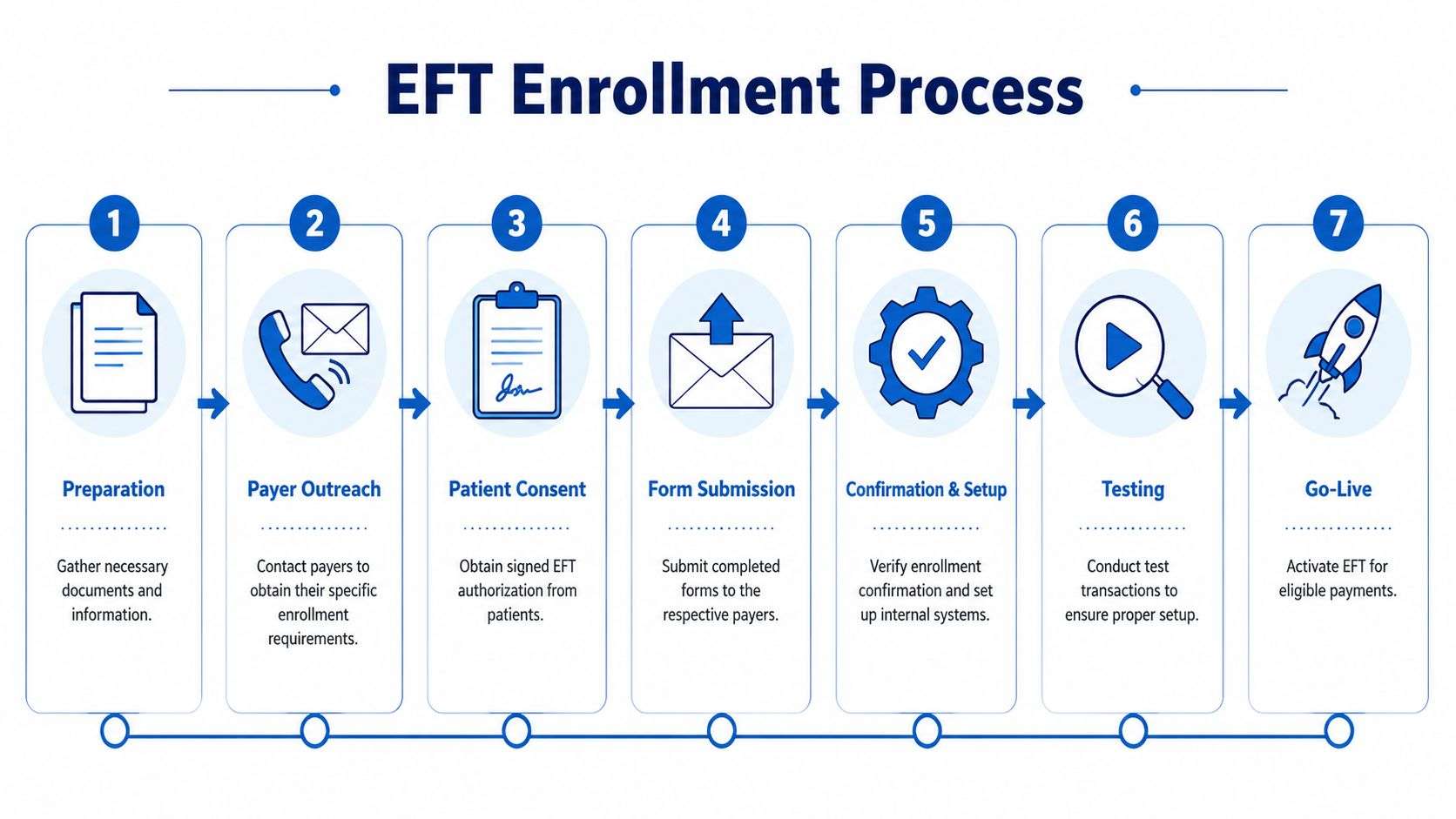
The fix is operational discipline. Patient EFT enrollment and payer EFT enrollment should run as separate workflows, with separate owners, checkpoints, and follow-up rules. If you combine them into one vague "payments setup" task, forms get signed but never activated correctly, remits arrive without matching setup, and staff spend time reversing avoidable mistakes.
Patient Enrollment At The Front Desk And After The Visit
Patient-side EFT should begin at the point where staff already discuss financial responsibility. That may be check-in, checkout, or payment plan setup. The goal is not to collect as many signatures as possible. The goal is to collect authorizations your team can use effectively after insurance adjudication without creating disputes.
A patient enrollment workflow that holds up in day-to-day billing usually includes these steps:
Confirm who can authorize the debit
Verify whether the signer is the patient, guarantor, parent, or another authorized account holder. If the bank account belongs to someone else, stop and get the right signer before the form moves any further.Match the authorization to the actual balance scenarios
State exactly what may be drafted. Copays, deductibles, coinsurance, missed appointment fees if your policy allows them, payment plans, and post-adjudication balances should be identified clearly. This is one of the easiest ways to reduce charge disputes later.Check eligibility and estimate timing before enrollment closes
Staff do not need to guarantee the final patient balance. They do need enough insurance information to explain whether the debit will happen same day, after a claim processes, or on a payment plan schedule. That timing matters because vague expectations drive callbacks and refund work.Enter the authorization into the practice management system the same day
A signed form in a tray has no operational value. Same-day entry lets billing staff use the authorization during statement follow-up and payment plan processing instead of discovering weeks later that consent was never loaded.Queue a follow-up review for post-adjudication use
If the authorization covers balances after insurance, assign a workqueue or tickler for staff to confirm the claim has finalized before drafting. That step protects patient trust and cuts down on avoidable reversals.
Many front desks face a challenge here: they collect the form correctly, then fail to connect it to the billing workflow that comes later. If your team cannot tell when a saved authorization should be used, enrollment is incomplete no matter how clean the paperwork looks.
Payer Enrollment For Insurance Reimbursements
Payer EFT has a different operational purpose. It shortens the time between adjudication and available cash, reduces paper check handling, and gives posting staff faster access to funds once ERA is tied in correctly. If payer enrollment is delayed or set up incorrectly, A/R days go up even when claims are being paid.
Start with a payer inventory. List every payer by entity, product line, TIN, service location, and current payment method. Then identify what is still paid by paper check, what is pending EFT, and what is enrolled for EFT without ERA. That last category causes more posting delays than many managers expect.
A workable payer enrollment process looks like this:
- Assign one accountable owner for submission, follow-up, and confirmation
- Maintain one current banking packet with approved account details and supporting documents
- Verify payee name, TIN, NPI, and service address against what the payer has on file before submission
- Enroll ERA with EFT whenever the payer allows it so deposits can be posted without manual research
- Track submission date, effective date, payer confirmation number, and first deposit date in a shared log
- Escalate stalled enrollments after a defined number of business days instead of waiting passively
The trade-off is simple. A little more control at enrollment saves a lot of cleanup later. Without that tracker, practices end up chasing missing deposits, splitting cash manually across locations, or posting from bank activity before remittance detail is available.
Payer setup also intersects with provider file maintenance. If a group is adding a location, changing legal structure, or updating rendering providers, EFT approval may stall until those records are aligned. That is why many revenue cycle teams tie EFT setup to broader credentialing in healthcare workflows rather than treating banking enrollment as a standalone billing task.
Add An Internal Review Step Before Submission
Enrollment should not move straight from collection to submission.
Use a short review path that catches issues while they are still easy to fix:
- Front office or intake review checks signer identity and missing fields
- Billing review confirms the authorization matches actual charge scenarios and payer setup needs
- Finance or management review approves bank account usage for payer enrollments and high-risk changes
- Compliance review confirms the form and handling process meet your internal requirements
Keep the checklist short enough that staff will use it. In my experience, five clean checks done every time beat a long approval process that people bypass.
Build Enrollment Into Ongoing Operations
One-time enrollment drives usually create a pile of forms and a second pile of exceptions. Practices get better results when EFT enrollment is built into routine workflows for new patients, payment plans, new providers, and new payer contracts.
That means training front desk and billing staff on the same script, reviewing pending payer enrollments during implementation meetings, and auditing inactive or incomplete authorizations on a set schedule. It also means measuring results operationally. Look at days in A/R, unapplied cash, statement volume, refund activity, and payment disputes after rollout.
That is the true test. A good EFT enrollment process does more than collect signatures. It speeds reimbursement, supports cleaner posting, and reduces the avoidable delays that keep cash from reaching the bank on time.
Securely Collecting And Storing Signed Authorizations
An eft authorization form contains more than billing convenience. It often holds bank account details, signatures, patient identifiers, and payment instructions connected to care. If your storage process is weak, the risk isn’t theoretical. It affects privacy, financial exposure, and your ability to defend a dispute.

Build Security Into The Workflow
The safest storage system is the one your staff can follow without workarounds. If the approved process is slow or confusing, people will save forms to desktops, email them internally, or print copies that never get secured properly.
A better approach is to design the workflow so the secure action is the default action. That usually means:
- Centralized digital intake through the practice management system or approved document platform
- Role-based access so only staff who need financial authorization records can open them
- Encrypted storage for scanned and native digital files
- Audit trails that show who viewed, changed, or uploaded a document
- Retention controls tied to your compliance schedule and destruction policy
This is also where e-signature tools matter. Products such as DocuSign and Adobe Sign can help if they’re configured properly and the signed document is routed directly into your approved repository. They become a problem when they function as a side channel and signed files stay in email inboxes.
Digital Storage Should Be Searchable And Restricted
Secure storage isn’t just about locking documents down. Your team also needs to retrieve the right authorization quickly during a dispute, refund request, or payer inquiry.
That means each record should be indexed with useful metadata, such as:
- patient or guarantor name
- date signed
- type of authorization
- account ending identifier
- location or practice entity
- staff member who verified the form
If retrieval takes too long, staff will recreate records, ask patients to sign again unnecessarily, or fail to answer a dispute cleanly. Practices that assign document governance to a specific privacy or compliance leader usually handle this better, especially when the responsibility aligns with the duties of a HIPAA privacy officer.
Security fails most often when ownership is vague. Someone has to own access, retention, retrieval, and destruction.
Physical Forms Need A Real Chain Of Custody
Some practices still collect paper EFT forms, especially during in-person registration or when patients prefer handwritten signatures. That’s workable, but only if paper handling is disciplined.
Use a physical document process with these controls:
Immediate receipt handling
Staff should never leave completed forms at the front desk in open view.
Locked interim storage
If scanning happens later, forms need a secure temporary location.
Prompt scanning to the official record
The scanned version should become the primary working copy.
Controlled shredding or archive transfer
Don’t let old paper forms accumulate in file drawers with general intake paperwork.
A paper-heavy office can still run a compliant EFT program, but it requires more discipline than is commonly realized. Physical convenience for the patient can’t become operational looseness for the practice.
Why Security By Design Wins
Practices sometimes treat document security as a separate compliance project. In reality, it’s part of payment operations. If a signed authorization can’t be found, can’t be authenticated, or was stored carelessly, the payment process breaks down when challenged.
That’s why security by design works better than patching together fixes after an incident. The right system doesn’t only protect data. It protects the practice’s ability to collect, defend, and reconcile authorized payments without panic.
Best Practices For EFT Verification And Reconciliation
Getting an eft authorization form signed is only the starting point. The revenue impact shows up later, when the payment clears, fails, posts to the wrong account, or gets disputed. That’s where verification and reconciliation separate a mature EFT workflow from one that only looks organized on paper.
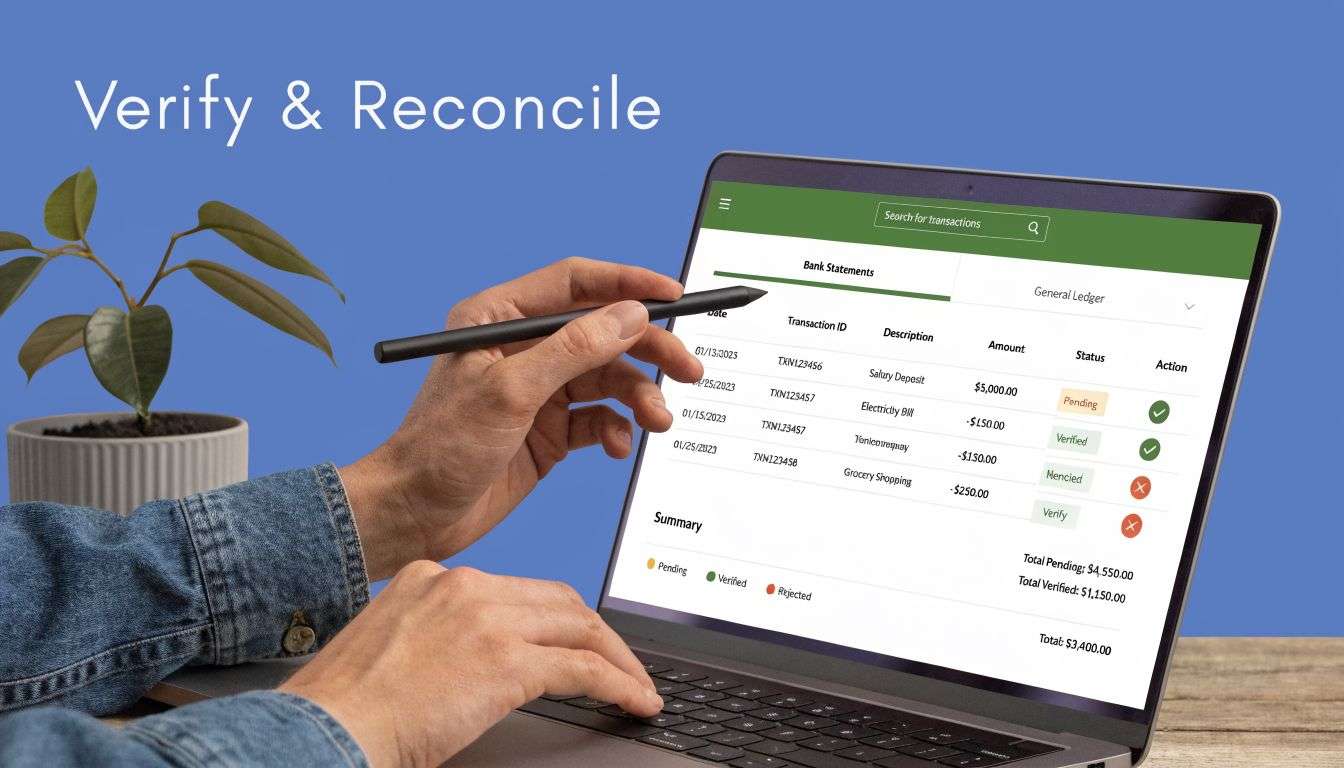
In medical billing, 22% of EFT disputes stem from unauthorized EFT claims, while 28% of ACH returns are due to incomplete form data. Properly authorized EFTs can also reduce AR days from 45 to 22 and cut denial rates by 18% for specialties like urgent care and OB-GYN, according to this analysis of EFT authorization performance in medical billing.
Verify Before You Chase Exceptions
Many billing teams spend too much time fixing returns that could have been prevented with pre-debit review. The form may be signed, but that doesn’t mean the account setup is clean.
Use a simple verification layer before active use:
- Match bank data carefully against the signed record before first draft
- Confirm debit timing aligns with what the patient authorized
- Review amount logic for recurring balances and payment plans
- Check system mapping so the payment posts to the correct guarantor or encounter
- Flag changes in bank details as a re-verification event, not a minor edit
When payers are involved, verification also means matching the EFT deposit to the remittance record and the corresponding claims. If those three elements don’t line up, posting slows down and staff start making manual assumptions.
Reconciliation Should Follow A Standard Rhythm
Strong reconciliation doesn’t happen when someone has time. It happens on schedule.
A practical cadence usually includes:
Daily Exception Review
Look first at failed or returned transactions, unapplied deposits, and any patient payment that doesn’t match an expected balance. Daily review keeps one bad batch from turning into a week of cleanup.
Deposit And Remit Matching
Insurance EFTs should be matched to remittance detail as they arrive. Patient debits should be matched to the account and date of service logic that triggered them. If your staff relies on PDF statements or raw bank exports, it may help to extract clean data from bank statements before doing higher-volume reconciliation work.
End Of Period Review
Month-end should confirm that all EFT activity has been posted, exceptions resolved or assigned, and unresolved disputes segregated from collectible AR. Teams that still manage this manually often benefit from a dedicated bank reconciliation Excel template to standardize who matches what and when.
Reconciliation problems rarely begin in accounting. They usually start in registration, enrollment, or weak exception handling.
The Exceptions That Need Fast Escalation
Not every returned or disputed payment carries the same risk. Some can wait for routine follow-up. Others need immediate review because they point to a process failure.
Escalate quickly when you see:
- Unauthorized payment claims because these often require document retrieval and timeline review
- Recurring failures from the same location because that usually signals training or setup issues
- Incomplete authorization records because re-collecting consent after the fact is much harder
- Mismatched account ownership because the person who signed may not control the account that was charged
A short exception log proves helpful. Don’t just note that a payment failed. Record why it failed, who owns the fix, whether the authorization is still usable, and whether retraining is needed.
What Good Reconciliation Looks Like Operationally
You can usually tell whether an EFT process is healthy without looking at a dashboard first. Healthy teams can answer basic questions quickly:
- Was this debit authorized?
- Where is the signed record?
- What charge triggered it?
- Did the funds settle?
- If not, what’s the reason and next action?
If those answers require three different people and a long email chain, the process isn’t stable yet. The best EFT workflows reduce ambiguity, not just payment lag.
Navigating The Compliance Maze Of EFT Authorization
A practice collects a patient balance by ACH on Monday, gets an unauthorized return on Wednesday, and then spends the next week trying to find the signed form, confirm what staff told the patient, and decide whether the debit should ever have been submitted. That is not just a compliance problem. It is an AR problem, a rework problem, and often a patient trust problem.
The practices that keep EFT authorizations under control usually stop treating compliance as a legal file that lives off to the side. They build it into front-desk intake, billing review, payment posting, and dispute response. That is what shortens AR days. It also lowers preventable returns and keeps payment issues from turning into denial-related write-offs later.
The baseline legal framework starts with the Electronic Funds Transfer Act and Regulation E, which define consumer rights and responsibilities for electronic fund transfers under Federal Reserve guidance on EFTA and Regulation E. For a medical practice, the operational point is straightforward. If you debit a patient account, you need clear authorization, a retrievable record, and a process for handling disputes and revocations without delay.
What Regulation E Changes Operationally
Regulation E matters the day a patient says, “I did not approve that draft.”
According to the same guidance, timing rules apply to how unauthorized transactions are reported and investigated. For a practice manager, that means documentation cannot sit in a general inbox or in a scanner queue waiting for someone to index it later. If the signed authorization, account details, and payment terms are not tied to the patient ledger right away, staff lose time during the exact moment they need speed.
I have seen this issue create two avoidable failures at once. First, the practice cannot defend the debit cleanly. Second, the account often goes back into patient AR with no clear next action, which delays follow-up and increases the chance that the balance ages unnecessarily.
Where ACH Rules Affect Denials And AR
The ACH side of the process is shaped by NACHA rules, especially around authorization language, revocation handling, and record retention. As noted earlier, those requirements are not paperwork for their own sake. They directly affect whether a payment is collectible, whether a return can be answered, and whether staff can safely continue a recurring draft plan.
In practice, weak ACH controls create downstream revenue cycle problems:
- recurring payments are set up with vague terms, so patients dispute them later
- revocation requests are not documented, so another draft is submitted in error
- records exist, but nobody can retrieve them quickly during a return review
- unauthorized returns rise, and billing staff spend time reworking balances that should have stayed resolved
That rework matters. Every returned draft can trigger reposting, patient outreach, statement suppression decisions, and manual review of the account. On high-volume patient-pay workflows, that friction adds up fast.
HIPAA Is Part Of The Same Workflow
HIPAA does not set the ACH authorization rules, but it does govern how related patient information is handled across intake, billing, scanning, storage, and internal access. An EFT form often contains enough information to create privacy risk if the document is mishandled.
The practical question is not whether the form is signed. The practical question is whether the right staff can access it, whether the wrong staff cannot, and whether the record is stored in a system that supports both dispute response and privacy controls.
That usually means setting rules for:
- role-based access to signed authorizations
- approved storage locations for scanned or electronic forms
- secure internal transmission of payment documents
- retention and destruction procedures
- audit trails that show who viewed or updated the record
A signed form stored in the wrong place still creates exposure.
A Compliance Checklist That Supports Collections
A workable EFT process should hold up under three kinds of pressure. A patient question, an audit request, and a monthly close review.
Use this checklist to test whether your current process does that:
- Does the form separate one-time debits from recurring debits clearly?
- Do staff explain the payment terms the same way every time?
- Is the signer tied to the correct patient account and bank account relationship?
- Can billing retrieve the authorization without asking another department to search for it?
- Are revocations and stop requests documented in the patient account immediately?
- Does your team review unauthorized returns for root cause, not just repost the balance?
- Can the practice show how retention, access, and disposal are handled for these records?
If several answers are no, the practice does not yet have a stable EFT workflow. It has a form, a few habits, and too much manual risk.
The Trade-Off Practices Need To Make
Some teams worry that tighter controls at intake will slow patient throughput. Sometimes they do add a minute or two up front. In my experience, that is still the cheaper option.
A clear script, a form that matches the actual payment plan, same-day indexing of the signed authorization, and a defined revocation process usually save far more time later. They reduce returns, shorten research time, make reconciliation cleaner, and keep patient balances from dropping back into aging buckets after staff thought they were resolved.
That is the actual compliance decision. Spend a little more effort at enrollment, or spend much more time later fixing preventable payment failures.
If your practice needs help building an EFT workflow that supports faster collections, cleaner posting, and fewer avoidable denials, One For All Medical Billing can help. Their team works with practices that need stronger revenue cycle controls across eligibility, claims, payment posting, reconciliation, AR follow-up, and compliance, so EFT authorizations fit into a process that’s reliable from intake through final payment.

